
Over the past several weeks, SEO monitoring platforms have reported unusually high levels of movement in Google search rankings. Multiple industry tracking tools show sustained volatility across search results during February and early March.
While ranking fluctuations are common during confirmed Google algorithm updates, the current situation is notable because Google has not announced a major core search update affecting standard search results during this period.
Our team at Woya Digital has been monitoring the situation closely, both through industry tracking tools and performance data across our client portfolio.
Industry tools show elevated volatility
Several well known SEO monitoring platforms have recorded increased volatility levels throughout February.
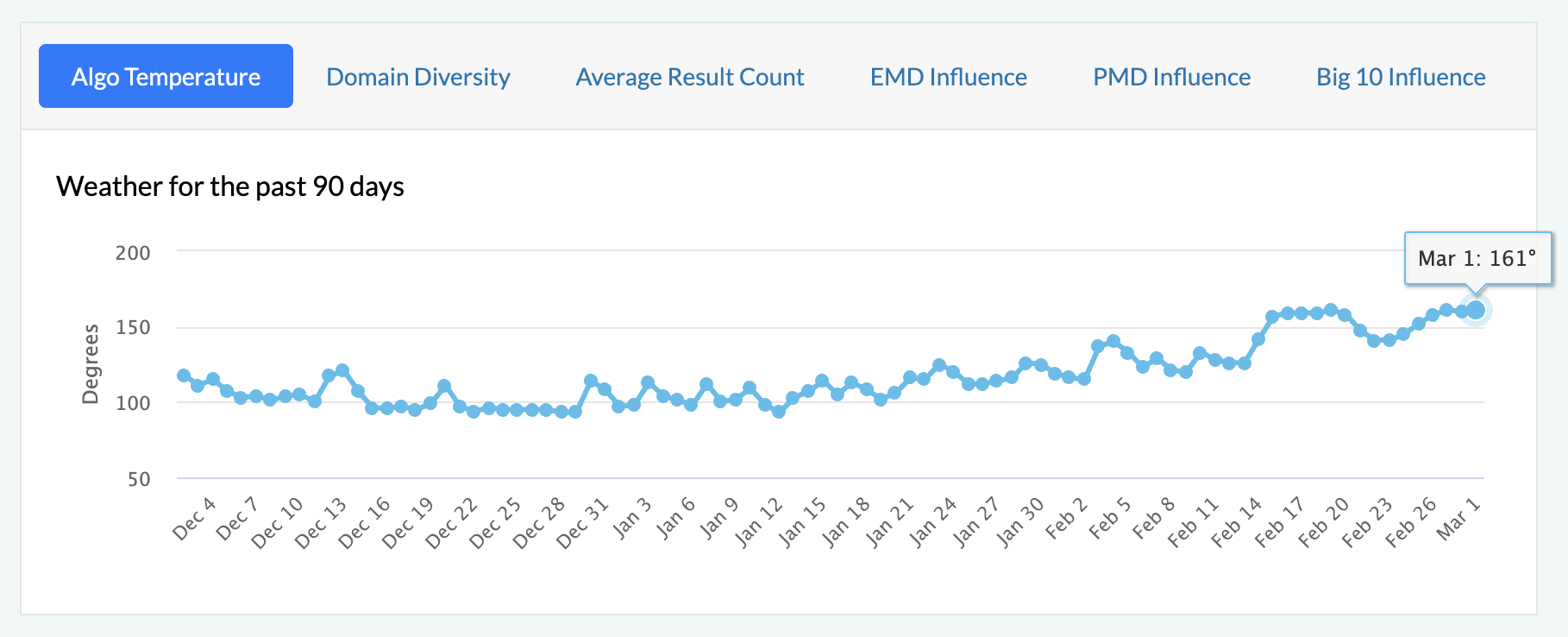
The chart above illustrates how ranking fluctuations have intensified over the past 90 days, with movement increasing steadily through January and peaking during February.
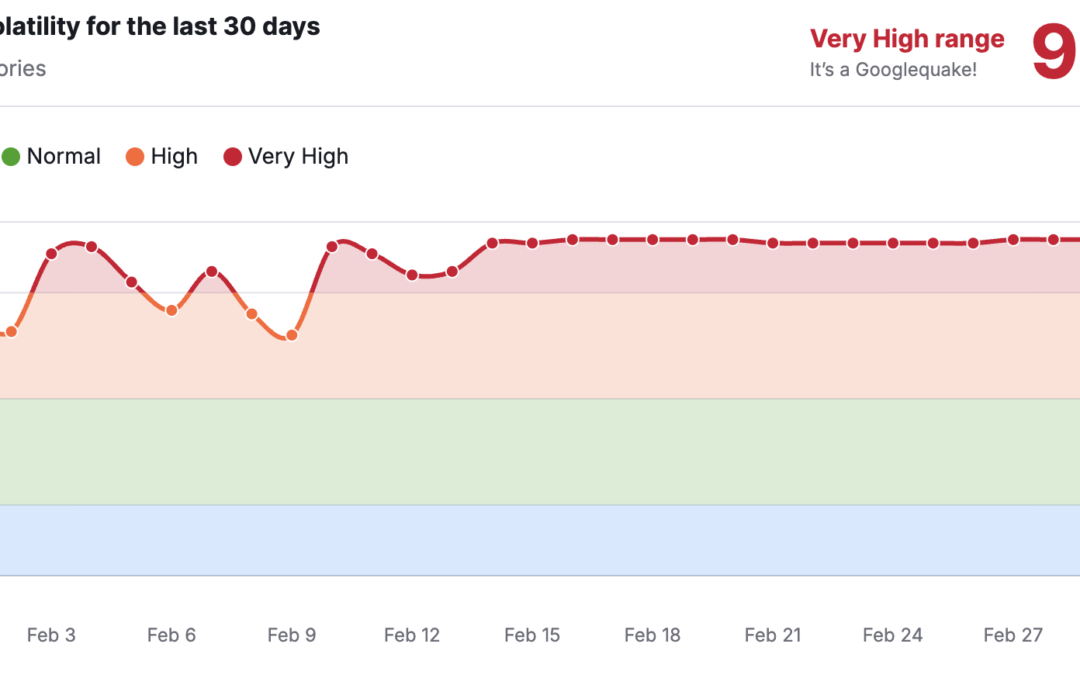
Industry sensors such as Mozcast show a rising algorithm “temperature”, which indicates higher than normal ranking changes across search results. At the same time, the SEMrush SERP sensor has recorded volatility levels in the very high range, reaching scores close to 9.5 out of 10, signalling significant movement across multiple sectors.
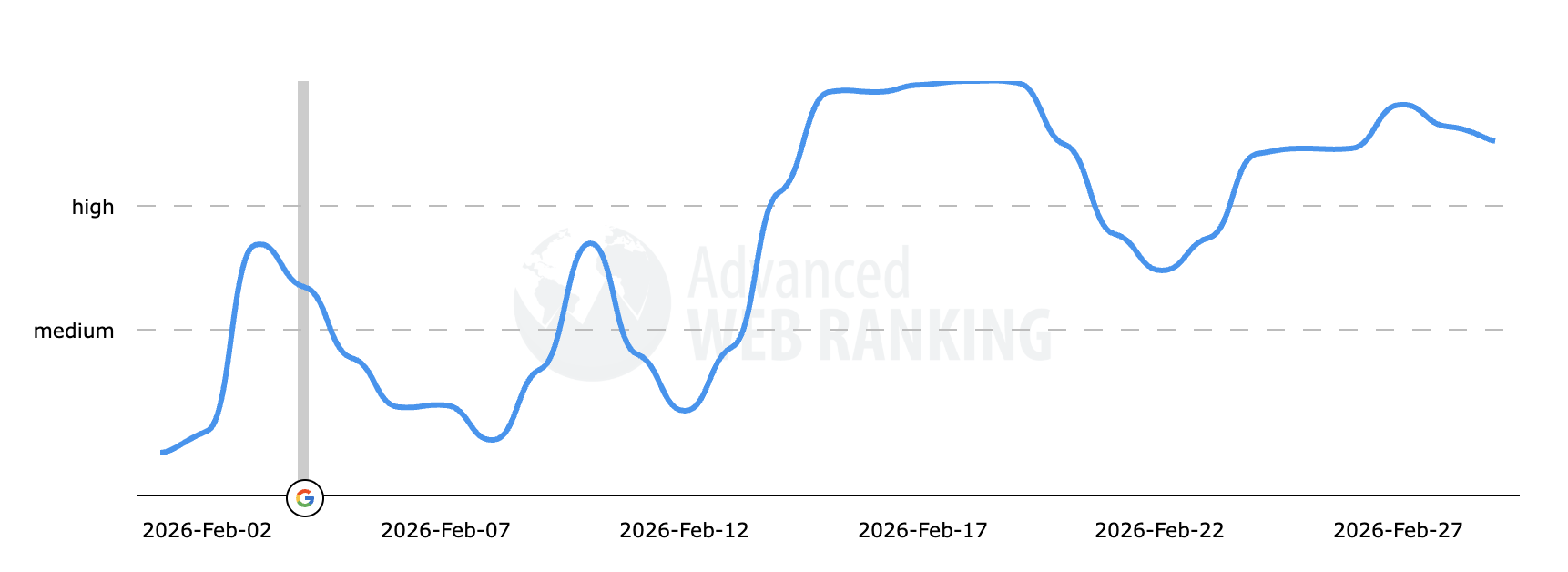
Additional tracking from Advanced Web Ranking also confirms elevated ranking fluctuations during the same period. When several independent tools show similar signals, it generally indicates that the wider search ecosystem is experiencing unusual levels of ranking movement.
Why is this level of volatility unusual
Typically, this type of ranking movement is only seen during confirmed Google core algorithm updates.
The only publicly confirmed change during this period was the February 2026 Google Discover update, which focused specifically on improving the quality of content shown within Discover feeds. That update was not expected to significantly affect traditional search rankings, making the current volatility across normal search results more unusual than typical algorithm cycles.
This suggests Google may be rolling out a series of smaller adjustments or refinements to ranking systems behind the scenes rather than a single announced update.
Reporting platform changes during February
Another factor that may be influencing some industry data is the set of changes many SEO reporting platforms made during February to adapt to evolving Google integrations.
Several analytics and SEO and GEO monitoring platforms updated how they connect with Google systems and APIs. In some cases, this created short-term inconsistencies across reporting dashboards. This means that part of the volatility reported across the industry may reflect data normalisation changes alongside genuine ranking movement.
For businesses monitoring rankings through third-party tools, this is an important reminder that short-term fluctuations in reporting data do not always represent long-term search performance.
Woya Digital client performance
Despite the wider industry volatility reported by monitoring platforms, performance across Woya Digital managed campaigns has remained strong.
Across our client portfolio, we observed net positive organic growth in January and February, even during periods when industry tracking tools were reporting elevated volatility.
Some temporary fluctuations were seen across a small number of keywords during February, which is normal when Google adjusts ranking signals, however, these movements have already stabilised.
As of today, performance across our campaigns has corrected and we are again seeing net positive organic growth trends. This reinforces the value of maintaining a long-term SEO strategy built on strong technical foundations, authoritative content and sustainable authority building.
Businesses that invest in consistent optimisation typically experience far less disruption during periods of algorithm volatility.
What businesses should do right now
When search results fluctuate, the worst response is often to make rapid changes based purely on short-term ranking movements. Instead, businesses should focus on the core principles that consistently influence search performance.
These include maintaining high-quality content that answers real user search intent, ensuring websites remain technically sound and continuing to build authority through trusted signals and backlinks.
Strong technical SEO foundations, including crawl efficiency, site speed and indexing health, remain critical during volatile periods. Businesses unsure about their technical setup may benefit from a professional review through a dedicated technical SEO audit.
At the same time, organisations should continue investing in authoritative content and long term visibility strategies. A well structured SEO strategy and consultancy approach helps ensure websites remain competitive even as Google refines its algorithms.
Key signs your rankings may be affected by volatility
During periods of algorithm movement, it is common for websites to see temporary changes in rankings or organic traffic.
Some of the most common indicators include short-term ranking changes across multiple keywords, sudden movement of competitors in search results, or fluctuations in traffic despite no technical issues being present on the website.
When several industry monitoring tools report elevated volatility at the same time, these changes are often affecting many websites simultaneously rather than a single site experiencing a specific problem.
In these situations, it is usually better to monitor performance trends rather than reacting to daily ranking changes.
The importance of long term authority signals
One of the strongest factors that protects websites during algorithm volatility is consistent authority building. Search engines increasingly rely on signals that indicate expertise, trust and brand credibility. These include high-quality backlinks, digital PR coverage and brand mentions from authoritative websites.
For many organisations this means investing in ongoing digital PR and authority building campaigns, which help strengthen brand visibility and trust signals over time.
Combining authority building with strong content development and technical optimisation helps create a balanced SEO strategy that performs well regardless of short-term algorithm changes.
Woya Digital’s perspective
From our analysis, the current environment appears to be influenced by a combination of factors.
Google may be making incremental adjustments to ranking systems behind the scenes, while at the same time several SEO reporting platforms have been adapting their data integrations with Google systems. The combination of these factors has likely amplified the level of volatility being reported across industry tracking tools.
For businesses with strong SEO foundations, these fluctuations are rarely cause for concern.
At Woya Digital, our focus remains on building sustainable long-term organic growth strategies that continue to perform regardless of short-term search movements.