SEO vs PPC: How to Pick the Right Digital Marketing Weapon

SEO vs PPC: How to Pick the Right Digital Marketing Weapon

Reading Time: 8 minutes

Successful marketing is more than a one-hit-wonder and takes a long-term strategic effort. So, while we’re here to talk about SEO vs PPC, let’s be clear – the answer isn’t going to be straightforward or universal!

There are many variables to finding the optimal way to tackle your digital marketing, PR, and advertising, depending on (just as a few factors) your sector, aspirations, the market climate and what you have to spend.

Ultimately, the correct approach for your business depends on, well, your business, so it’s impossible to give a blissfully easy answer without a fair few caveats.

Here, the Woya team compares all the pros and cons, costs and benefits, side by side to help you decide where best to invest your budget.

The PPC vs SEO Debate Explained

Before we get into the details, let’s clarify the context behind these powerful publicity cousins.

    • PPC (or pay per click) is paid advertising you can choose to use on Google Ads, search engines and social media to drive traffic to your site.
    • SEO (or search engine optimisation) is an organic, systematic method of optimising your website and digital assets to naturally steer a larger user base to your business, primarily through direct hits on search engine enquiries.

While you can do both simultaneously, you’ll usually want to have a priority to dictate how you channel your resources.

Benefits of PPC as a Business Digital Marketing Resource

Paid advertising and organic searches might look the same to a casual user on the SERP (search engine results page). Still, they are considerably different, and you’ll get a varying response.

Consumer trust and click-through rates heavily favour organic search results since users know paid ads are promotions.

But, that doesn’t mean that PPC doesn’t have some advantages:

    • Paid searches take pole position right at the top of the page, with the user initially seeing the top four on a PC or laptop and the highest three on a mobile device.
    • Ads are under your control, so you get to decide what contact info, location details, sales points, or pricing shows in that space – whereas organic search picks and chooses the bits of content from your site it thinks are most relevant.
    • Product Listing Ads (PLAs) are a great way to enrich your PPC promotion with a visual to show users what they’re about to click on, pushing up click-through rates.

You can decide how much you’re going to spend per day, so you’ll rarely see your clicks soaring (possibly without corresponding conversions!), resulting in a hefty dent in your bank balance without the sales to match – provided you set a fixed budget.

Targeted Online Ads Through PPC

One of the key reasons businesses invest in PPC is that it’s a form of sharply honed advertising where you select parameters to control who sees your ad.

The idea is that you’re only paying to advertise to people that match your demographic, selected against criteria such as previous visits, audience location, search language and specific keywords.

Behind that, you get a wealth of intelligence about how your marketing is performing, with things like:

    • Tracked conversion rates.
    • Information about the best performing keywords.
    • Reports on the cost per click and conversion.

You can feed that analysis, often sourced through Google Analytics, back into your wider marketing strategy, and gain knowledge that you wouldn’t have with an organic search.

Pitfalls of PPC in the Wider Business Advertising Framework

Let’s balance out those plus points with a look at the disadvantages.

The first, perhaps obvious problem, is cost. While you can manage PPC campaigns, it requires time, effort, and regular tracking.

Small PPC budgets can run out in seconds, so if you want to capture market share and grow brand awareness on a big scale, you’ll equally have to invest a big amount.

If you find that you can’t keep up with the costs, your ads discontinue immediately, and any growing lead gen stops, so PPC is only as solid as the money you’re willing to pour into it.

The PPC Bidding Wars

Bidding wars are common, if not expected when using PPC.

Competitive keywords are in high demand, and it’s often the case that the largest players with huge marketing budgets knock out smaller rivals like a set of bowling pins.

Any time you launch a new PPC ad, you’re pinching a slice of the pie from somebody else, and if you have to keep upping the stakes to stay ahead, it can be disastrous.

Managing a Successful PPC Campaign

We’ll not get into a huge amount of detail here, but the multitude of PPC search advertising options can be more trouble than they’re worth.

For example, you’ll need to monitor results continually to compare text ads, graphics and product listings, refining your promotions even several times a day to get the most from your advertising spend.

PPC ads don’t run autonomously, and there are zero guarantees of results. Businesses need to invest time and knowledge in optimising every campaign, reviewing things like:

    • Search engine positioning
    • Click-through rates
    • Quality scoring
    • Keyword bids

People costs can include hiring a marketing agency or having a PPC team member who takes responsibility for your promotions, so it’s not just a question of paying some money to Google and hoping it will do the rest.

Finally, be aware that PPC is pretty easy to replicate.

If you’re running successful ads, it’s likely a matter of time before a competitor gets involved, potentially draining your returns, bidding against you, and potentially copying your sales funnel with minimal effort.

Advantages of Organic SEO to Drive Business Growth

Next, we’ll turn our attention to SEO – organic growth that is the gold standard of marketing best practises and often used alongside PPC as a sustainable advertising strategy.

It isn’t easy to pin down SEO into one series of steps since it’s a field that blends creativity with analytics, brand differentiation with audience engagement, and sales with social value.

SEO as a Growth Strategy

The objective of SEO is to enable your business to rank naturally on the SERP – hence the term organic.

Organic searches best match the search enquiry and appear underneath the paid ads or shopping pages. They are reliant on search engine bots to crawl your site, evaluate the quality of your content, index it, and then assess your authority.

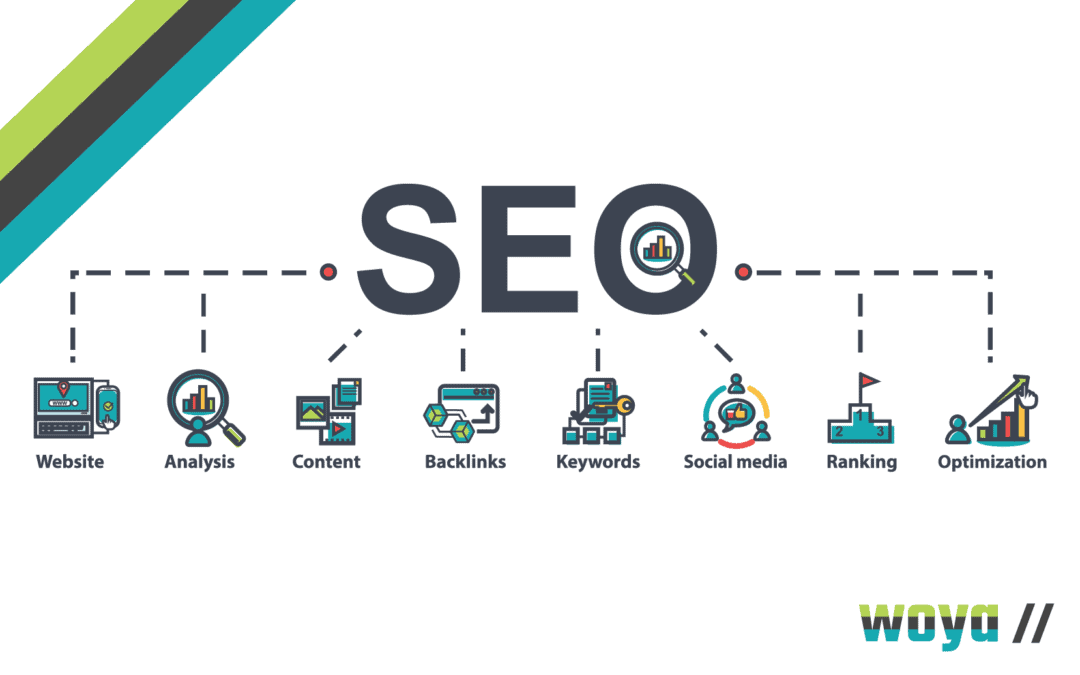
The Google algorithm considers a huge number of markers to do so, and a digital marketing team will look at:

    • Content marketing – publishing, creating and advertising targeted content.
    • Technical SEO – the performance and capacity of your website infrastructure.
    • On-page SEO – web page content, links, keywords, headings and title tags.
    • Link building – building backlinks and internal links to establish authority.
    • UX – the customer experience when interacting with your site, products and services.

Ranking isn’t simple, and SEO is complex, not least because it involves many elements. The continual algorithm updates mean you need to balance those factors against each other and can’t stay still.

The Pros of SEO

While SEO takes time to generate results, there are multiple advantages.

Organic SEO is cost-effective, and although you’ll pay for expertise from digital marketing professionals, the clicks and conversions cost nothing. It’s often a great option for small or growing businesses because you can manage your monthly outgoings, potentially scaling your company exponentially without a corresponding spike in promotional costs.

Essentially, SEO is sustainable. Your returns don’t stop when you stop paying, and you can build on a strong ranking to showcase your business to customers around the clock.

If you’ve optimised your site and keep contributing valuable content, you’ll usually see fairly stable rankings, whereas PPC ads fluctuate wildly depending on price competition.

Other benefits to consider include:

    • Flexible content creation targeted to each step of your sales funnel without prioritising middle-ranking keywords to get the best return for your ad spend.
    • Increased click-throughs – customers know that paid ads aren’t the results Google thinks they want to see. The average organic result gets ten times more clicks than paid ads, even though they’re displayed underneath.
    • Positioning – visibility is key, and if your content regularly crops up through organic searches, you establish trust and brand authority, with ongoing positive benefits.

Most users place far higher credibility on organic searches and skip past ads because natural results are perceived as more trustworthy.

The strategic advantage is that, although it takes more time and effort to gain organic search visibility, once you’ve established yourself in this way, your competitors can’t copy your techniques, they can’t buy you out of the market, and they can’t nab your engaged customer base.

Relying on PPC isn’t something we’d recommend (not that it doesn’t have a well-earned place in a well-rounded digital marketing approach!), but it’s more a tool to boost sales and visibility than a way to get ahead of competitors.

The Downside of Relying on SEO to Grow Your Customer Audience

As with anything, there is a flipside. Organic traffic, as we’ve mentioned, isn’t a lightning-fast outcome.

If you’re beginning a new SEO campaign, you need to be conscious that mega-corporations like Amazon and eBay may dominate popular search terms. Of course, the same applies to PPC, where you’re going to be competing directly on a cost basis for the same keywords!

The other caveat is that organic SEO requires sustainable, ongoing expertise and talent, tackling tasks such as:

    • Creating valuable content assets to achieve visibility.
    • Handling safe, credible link-building challenges.
    • Analysing data, conversions, and stumbling blocks in your funnel.
    • Technical SEO to ensure your site or app loads fast, works flawlessly and provides a great level of responsiveness and interaction.

As an ongoing process, organic SEO means making tweaks and improvements as you go. It isn’t ever possible to optimise a site 100%, and leave it be – there is always work required.

Choosing Between SEO vs PPC – the Conclusion

Both PPC and organic SEO are valuable and can make a profound difference to your business performance, brand awareness and bottom line – but neither are resources you can use once and forget as a standalone, one-off project.

SEO is an investment in the ongoing success of your company. It typically means working with an experienced digital marketing team to create a future-proof strategy and work through that methodically, targeting all of the many elements of organic search.

PPC is a great way to jump to the top of the Google page, but it should be used carefully for lead-gen or to develop a good understanding of the data behind your traffic.

As a quick recap:

PPC SEO
Costs Each click costs you money - although you can set a spending limit per day. The initial investment required is higher than to launch a new SEO strategy. Clicks are free but require time and effort to build a strong presence. Costs are scalable since SEO doesn't cost more the faster you grow - it is more cost-effective over the long run.
Speed Instant results (until your campaign ends, or you're out-bid). Promotions show only until your budget has been utilised, so it may be time-limited. Takes longer but is then sustainable, long-term. Organic results show 24/7, 365 days a year, without manual intervention.
Targeting You can tightly target ads to hit specific audience demographics. Extensions to ads can enhance results. Targeting is based on keywords throughout the sales funnel. There is no control over regularly rolled-out algorithm changes.
Returns When ads are turned off, you lose visibility. People costs are lower if you manage PPC in-house, but you pay for both campaign management and click charges. SEO attracts around 10 x the clicks of a paid ad. There isn't a guarantee that your strategy will outperform competitors, but a rival business can't copy your funnel or buy out your ranking.

For most businesses, the goal is to create a hybrid strategy to capture the advantages of both SEO and PPC, utilising the data analysis available through PPC to inform a cohesive SEO approach.

Much depends on your company, what you’re trying to achieve, and the nature of the market you’re trading in.

Still, in a pinch, it’s best to start with developing SEO targets and identify where you can add in PPC to contribute to hitting those objectives.

If you’d like more information about the pros and cons of SEO vs PPC or help to establish the right ways to get started with a powerful, long-standing organic SEO strategy to support business growth, please get in touch with Woya Digital. Our experts offer a range of SEO packages and support structures, targeted advice, and everything in-between as an accomplished organic SEO agency!

How Much Does SEO Cost in the UK?

How Much Does SEO Cost in the UK?

Reading Time: 8 minutes

We all get that SEO is crucial for search engine visibility, digital presence, brand awareness and business growth – but what does SEO cost in the UK?

Business owners need to understand the parameters that make the most difference to pricing.
Here’s why:

    • Over half (54%) of small businesses budget ZERO for SEO. That’s a massive problem and a forecast of slow, painful growth – if any at all.
    • Many companies, particularly older, long-standing organisations, don’t understand the relevance of SEO, either ignoring it or being oversold services that won’t touch their bottom line.
    • There’s something like 3.5 billion Google searches every single day. Falling behind or missing out on the power of SEO means that those in the know leave everyone else for dust – when catching up really wouldn’t have been that difficult!

SEO pricing isn’t always straightforward, and that’s why it’s difficult to answer a straight question, what does SEO cost in the UK? Basically it’s difficult to put a tag on a service that could send a small start-up into the stratosphere – or crash and burn if it isn’t done right.

The Woya SEO team has put our heads together to show you some real-life averages to explain how much you should realistically budget for SEO.

Got questions? Get in touch, we’re here to help!

The SEO Divide: Price vs Perception

Like most digital specialists, our talented SEO team will tell you that many clients don’t have a firm grasp of exactly what SEO is or what it’s there for – and that’s understandable!

There’s a huge difference between SEO and pay per click (PPC) ads.

Many companies assume that they’ve ticked SEO off of their to-do list by setting up a couple of Google campaigns, maybe a Facebook ad here and there, and sitting back with tightly crossed fingers.

However, real SEO – a carefully crafted digital marketing strategy chasing organic growth – is about that gold standard whereby customers find you all by themselves without being funnelled into an advertising loop they didn’t ask for.

Now we’ve clarified, let’s get down to the pounds and pennies.

Standard SEO Pricing Structures

There isn’t a right or wrong way to charge for SEO.

Woya goes for fixed-price PAYG packages with itemised services because, well, we’re all about transparency and inviting customers to select the support they need!

That said, there are three core ways to structure pricing, and none are bad, per se.

    • Hourly SEO Costs: Charging per hour is simple, provided you have clear expectations about what your SEO contractor will achieve in that 60 minutes. Most SEO agencies won’t bother with hourly pricing, but it’s common with freelancers.
    • Monthly Retainers: Monthly costs work if you want an ongoing service with a fixed price, as long as you know what you’re getting for that cost and which services are included.
    • Project SEO Costs: Charging per project focuses on achieving a specific goal or producing a particular piece of work to contribute to a broader SEO strategy. The key here is to agree on the scope of the work in writing from day one and then make sure the project costs align with the anticipated returns.

What does SEO cost in the UK?

Ok, so when reviewing average SEO costs in the UK, we’ve got a basis of understanding, and we’ll explain more shortly about returns on investment, but let’s pause to take stock and talk about quality.

Like everything, you get what you pay for.

There’s a vast range out there:

    • DIY SEO means, of course, doing it yourself. You can pay for various subscriptions that offer to deliver keywords or other basic tools to help you along the way.
    • Low-cost SEO is at the introductory end; usually, the minimum required to make a dent.
    • Mid-level SEO is more common, perhaps with an agency that offers specific services. This option is more reliable than anything cheap and not-so-cheerful but can have limitations and won’t generally be a comprehensive, long-term collaboration.
    • High-end SEO is your shining SEO-shaped star and what you expect from established digital marketers who offer best in class performance and exceptional skilfulness.

Before we crack on, we’ll look at a couple of the pros and cons to watch out for, along with the average SEO costs.

DIY SEO Costs

Primarily used for: Small businesses, start-ups, or self-employed traders who want to do what they can without any expense.

    • Pitfalls: SEO is a huge sector of proficiency, so it’s improbable that you’ll make any progress without investing some serious time into learning.
    • Average cost: £0 (aside from any SEO tools you subscribe to).

Low-Cost SEO Prices

Primarily used for: SMEs perhaps getting started with a content marketing plan, needing suggestions and initial ideas about improving their websites.

    • Pitfalls: Anything low-cost might not be worth paying for at all. It’s not unusual for online service providers to offer crazily low prices that often fail to achieve results.
    • Is it really low-cost, with average cost: £20 – £110 per hour, based on freelancer rates. Buyers might be lucky, but without sustained and consistent work, it’s unlikely to yield significant results.

Mid-Level SEO Costs

Primarily used for: Established businesses with a content strategy that needs refining to build a stronger brand presence, or just starting SEO after over reliance on paid solutions such as Google Adwords.

    • Pitfalls: Success depends heavily on the experience and abilities of the SEO agency – so it could be money well spent or a drain on your budget. Look for experience, case studies and reference clients to support success stories.
    • Average cost: £750 – £2,500 a month.

High-End SEO Prices

Primarily used for high-volume online businesses, eCommerce retailers and companies needing dexterous support to identify and fix technical SEO challenges or get ahead in a competitive market.

    • Pitfalls: There aren’t many SEO agencies with the right experience, technical proficiency and creativity to deliver.
    • Average cost: £2,500 – £9,000 a month (plus costs) or more depending on the site size and team needed to deliver the project.

Psst, while we’re far from your average SEO agency, you can sneak a peek at our packages here if you’re so inclined!

Let’s dive into returns next, so you’ve got an idea of what you might expect to make, depending on what you’re spending.

Calculating Investment Returns on Professional SEO Services

Any business investment has an element of risk and a corresponding return – which is what we’re aiming for.

It can be complex to try and quantify what you’re getting out of your SEO spend, but let’s look at some of the options to try and pin down your returns.

Comparing Organic Traffic Volumes

Organic traffic is a big deal in SEO, and the better your content and strategy, the higher those web hits will climb. Checking out your metrics is relatively simple:

  1. Type in your most important keywords in the Google Keyword Planner.
  2. You’ll see some figures, such as the monthly average search volume.
  3. Compare the hits to your monthly traffic, and you’ve got an idea about how well you’re doing.

It’s also worth checking out where direct competitors are falling on the search engine rankings, compared to your site, to see who’s outperforming you (for now).

SEO Revenue Returns

Turning website visits and organic traffic into sales figures is equally vague, but if you’ve got access to your income metrics and your conversion rates, you’re off to a good start.

If you have a Google Analytics account, it’ll help, showing things like how many leads translate into an actual sale – this is usually somewhere around 2% for retail and 5% for lead-gen as a rough guide.

Compare monthly traffic, conversion rates and sales, and you should see a correlation where revenue rises as your organic search results improve.

The trick with SEO returns on investment is that you’re not going to get instant outcomes or see a sudden leap in profits in the first 24-hours, and probably not in the first 24 days, either. Honestly be prepared for it to take months and be alarmed if an seo agency is saying otherwise.

SEO needs to be embedded in your digital assets and pages to make cumulative gains.

You can’t get onto the fun bits without having a solid framework – things like fast web loading speeds, a good base of backlinks, effective information architecture, keywords and metadata on your web pages.

If you’re in doubt, we’d say it’s best to consult a real SEO agency (or get in touch with Woya).

Any great SEO agency will be happy to discuss realistic returns and expected timescales, so you’re better informed about what you should anticipate.

Is Low-Cost SEO Worth Paying For?

Let’s be clear that there is a toss-up between budgets and outcomes.

SEO isn’t something you can master by watching a few YouTube videos. After decades of experience, our capable team still focuses on keeping up with new trends, harnessing new technologies and adapting new techniques.

While there are plenty of individuals and companies claiming to offer effective SEO for minimal costs, it’s never, in our experience, worth spending anything on.

Worthwhile SEO requires:

    • Research and diligent analysis.
    • Expertise and exacting skills.
    • Time and knowledge.
    • Action and regular reporting.

Ultimately, cheap SEO could do more harm than good. Unethical methods of forcing algorithms to return unrealistic results could work short-term but result in penalties that mitigate your growth ability.

The Risks of Unsuitable SEO Practises

We’re here to talk about average costs and won’t get into white hat vs black hat SEO, but let’s clarify that Google algorithms remain crucial to SEO performance.

The data that matters includes:

    • Anchor texts
    • Content quality
    • Keyword density
    • Backlinks
    • Guest posting
    • Core web vitals
    • And everything else in between

Search engine algorithms themselves are fairly basic in principle, but the underlying mechanisms are anything but.

Sites that use underhanded SEO methods, such as buying spam backlinks, will more often than not be recognised by Google and punished accordingly.

A loss of organic traffic will have a severe impact on your ability to sell or gain brand reputation, no matter how much money you throw at paid ads.

Google also has a human review system, so even if the bots don’t pick up an SEO shortcut, it will come to their attention if you use random links, keyword stuffing or anything similar.

Our takeaway is that if you cannot pay for SEO, it’s probably better to invest your own time into learning some of the simpler techniques.

Although it might be a slow, gradual approach, it’s likely a better deal than wasting cash on cheap SEO that could be disastrous.

The Intrinsic Value of Outstanding High-End SEO

At the other end of the scale, premium SEO can be costly. However, that depends on the agency you work with.

We like to challenge market trends by offering PAYG packages without knuckling down behind retainers or minimum-term contracts, but that isn’t a proposal you’ll find everywhere!

The big difference is that an advanced SEO team can work wonders and make a remarkable difference to your online fortunes in multiple ways:

    • Managing Google penalties (if you’ve fallen foul of the issues we mentioned just now). Careful analysis can uncover ways to potentially resolve those negative impacts.
    • Fixing technical SEO issues on your site by adding new functionalities, optimising your analytics, or crafting new strategies to resolve the problem.

If you’re operating in high-volume or competitive sectors, rely on digital traffic to generate revenue, or want to boost your brand beyond all recognition, this is the only real way to go.

Outperforming the market is possible but relies on skill, expertise, and creative approaches to tackle the unique challenges you face while sometimes adopting aggressive strategies to get past the competition.

Finding the Balance – Creating an SEO Budget

By this stage, we’ve got a decent idea in response to what does SEO cost in the UK, the vast difference between cheap and high-quality, and why it’s well worth investing as much as you can in getting the best professionals on your team – within reason.

It’s important to determine the budget available and how much it is worth investing in a specific business or branch.

There isn’t a catch-all answer since the best approach depends on the site, the potential growth available, and how competitive your industry is.

The first step is always analysis – even if it isn’t the most exciting aspect of SEO organic growth! By understanding where you stand in the grand scheme of things and taking the time to compare that to your closest rivals, you generate a firm knowledge about the suitable techniques available to get the edge.

We’ll say it again – there are no shortcuts here worth taking.

If it’s worth doing, it must be done right, so never rush into SEO looking for a cheap deal or a quick fix since it won’t turn out well.

If you need more advice about SEO, for a transparent answer to what does SEO cost in the UK, guidance about how much it’s worth investing in your site, or to have a general chat about the opportunities out there, please get in touch with the friendly bunch at Woya, and we’ll steer you down the right path.

Google My Business Setup and Optimisation

Google My Business Setup and Optimisation

Reading Time: 4 minutes

Google My Business is a hugely beneficial marketing tool for local and small businesses who need to be found online. It can prevent companies getting lost in the tens of thousands of related search results when internet users near them research into something similar.

We’ve published before about why small and local businesses need a presence on Google My Business, but here we guide you through your Google My Business setup and optimisation process: to benefit your local SEO and help grow your local business online.

Remind me: what is Google My Business?

Google My Business is a business marketing tool aimed at local business owners to help build them up a web presence on what is increasingly a busy and crowded marketplace online through the Google search engine. Google My Business presents address, website and contact details for a local business in a prominent feature when a related term is searched on Google. GMB also powers Google Maps, so it’s essential to get this right.

What benefits are there to Google My Business?

Google hosts over 3.5 billion searches on a daily basis; so for small local businesses, it can feel difficult to be seen amongst all the competition. Google My Business listings improve local SEO by targeting those searching from or for the geographical area relevant to the local business and presenting plenty of information on the company in an easy to read and prominent position on the front page of listings.

What is the cost?

Google My Business is completely free to set up! While some businesses do choose to go on and invest money in various advertising options with Google, this is a separate expenditure and is completely optional. Providing your Google My Business listing is completed sufficiently, further advertising is by no means a necessity.

Setting up Google My Business: Step-by-Step

To set up your free Google My Business listing, first go to www.google.com/business.

You will be taken through a range of steps in order to setup your account and input all relevant information. This includes:

  • Business name
  • Business category
  • Geographic location (for face to face service or an office presence)
  • Where customers can be served
  • Premises address
  • Contact details.

Once this detail has all been added, you can publish this listing and the data will be processed by Google.

A Google My Business profile must then be verified to be publicly listed – and this proves that the business owner is genuine. Claiming the profile through verifying it allows the listing to display a Google Maps location and to share posts.

There are currently two ways to verify a profile; but for many, only one method is available. Verifying by postcard, whereby Google sends a physical postcard with a bespoke code on it to the business’ address for them to then input into the site’s dashboard in the back-end; is the most common method of business verification. The address listed on Google must match exactly where it is to be received. Verification by postcard can take up to 14 days, and if it hasn’t arrived by this point, a new one can be requested.

Some businesses are given the option to verify their profile by phone. If this method is applicable, it will be displayed as you click through to the verification process. This allows for an automated phone call with a confirmation code to be read through it to be made directly to the business phone number listed. This can take place immediately.

There have been trials of verification through a smartphone app and via email, but neither of these methods have yet been rolled out to all of those applying.

Without verification, your Google My Business account will remain inactive and options are very limited. In order to optimise its presence, verification should always be sought.

Once verification has been completed, photos should be added to the business listing. Even if there are not physical premises to photograph and feature, something related should always be added. Google’s own statistics show that businesses with photos receive on average 35% more click-throughs to their website than those without; and photos have a beneficial impact on local SEO.

Once My Listing is live… what next?

Once your profile has a successful listing on search results, it doesn’t mean the job is done and work can halt. Instead, there’s lots of ways to optimise the profile to keep local SEO consistently high and ensure that the listing is shown to as many people as possible. These include:

  • Adding and updating relevant keywords to the listing
    • Keywords are always required for decent SEO, but when included in a Google My Business listing, will further increase the chances of it being displayed to those searching for something relevant
  • Uploading a logo, cover photo and photo/video content
    • Regularly updating and adding content demonstrates a consistent and regular commitment to delivering up-to-date information, which Google recognises and rewards with favourable algorithm prioritisation
  • Encouraging regular reviews
    • Reviews are displayed alongside business information, and the higher the average score, the better. Sending out a link to review the business to existing customers alongside the management and response to existing reviews shows that the business is authentic in its customer care standards
  • Publish offers, events, products and services
    • Google users are used to convenience and so like to be presented with as much information as possible with as little effort as possible. Ensuring a Google My Business listing has as much up-to-date data on it allows interested users to access all the info they need in one place
  • Make use of customer insights
    • Google provides user insights to all Google My Business clients. These allow for those using the service to better understand their audience and their browsing habits, as well as to identify how and why they interact with the business. This presents opportunity for continuous improvement and optimisation.

A Google My Business presence should remain as up-to-date and relevant as possible in order to demonstrate the activity of the company to both Google itself and its users. The impact this will have on local SEO, and therefore custom, is hugely beneficial – so if you haven’t started already, why not?

If you’re a local business looking for further support with your GMB listing and local marketing, don’t hesitate to get in touch with the Woya Digital team.

Black Hat vs. White Hat SEO

Black Hat vs. White Hat SEO

Reading Time: 4 minutes

SEO is truly a cornerstone to business marketing in the modern age; and if any organisation wants to find its place online, SEO must form part of their ongoing strategy. With Google facilitating some 3.5 billion searches every day and a market share of over 92%, it makes sense for companies to optimise their SEO efforts in a way to fit the Google algorithm.

However there are different techniques to be used, and not be used – you may have hear the terms ‘White Hat’ and ‘Black Hat’?

What is SEO and why is it important?

SEO refers to Search Engine Optimisation. SEO is the practice of optimising online content through a business’ website, social media or any other presence online. Content can be optimised through the creation of relevant content, through increasing usability and accessibility of a website and through the production of authentic third party comments and links on the business.

SEO is important because when done correctly, it fits the Google algorithm and helps the machine learning behind the scenes to best understand when and where to display a search result based on its relevancy to the search being carried out. This means that when a Google user searches a word or term on the site, they are more likely to see relevant results – and therefore, if they’re googling something linked to your business, your business’ online presence is more likely to be prominently displayed in the Google ranking. This can gain significant competitive advantage over competitors.

In a world where ‘to google’ has become a verb and an everyday way of life for the majority of the population, having a carefully curated presence online that displays when people look up something relevant isn’t a ‘nice-to-have’ business marketing tool – it’s a must.

White Hat SEO

White Hat SEO is a technique used to optimise content online by targeting it and shaping it for a human audience. This means that the content is created for and aimed at relevant users and viewers without the concern of any additional tools used to target an algorithm or Google ranking.

White Hat SEO includes the creation of high quality, niche content, rich in naturally occurring keywords and phrases, the proper construction of links and meta tags, and the organic linking to and from content by appropriate third parties.

White Hat SEO is considered the most ethical and appropriate way to optimise an online presence in order to improve a Google ranking.

Black Hat SEO

Black Hat SEO is the usage of techniques that directly targets search engine algorithms to increase Google ranking position, without the consideration of the human audience who may be reading, viewing or using the content displayed.

Techniques used by those practising Black Hat SEO include keyword stuffing, link farming, spamming and buying followers and likes. Such techniques are used in the hope of ‘tricking’ the Google algorithm into understanding and promoting the content to a higher ranking on SERPs (Search Engine Results Pages).

Black Hat SEO techniques are commonly employed by low quality or altogether false SEO or business marketing agencies who do not intend to deliver on a proper investment.

What does Google prefer – White or Black Hat SEO?

The ethos behind Google is always to deliver the most appropriate search results possible, so Google rankings should be based on real human behaviour and relevancy. Therefore, it is of no surprise that Google favours White Hate SEO tactics over Black Hat SEO tactics.

White Hat SEO sits comfortably within the Google Terms of Usages (Ts & Cs), but Black Hat SEO does not – so technically, those utilising the latter techniques for their online presence are in breach of their user agreement and can be removed from the site altogether. Indeed while this doesn’t often actually happen in practice, the risk is more than the Google ranking priority will be realigned and so the results of Black Hat SEO negative rather than positive for the business.

White Hat SEO is a long-term and continual practice, whereas Black Hat SEO is a quick means to an end rather than a solution that lasts. This means that not only is enacting Black Hat SEO techniques a risk, it is unlikely to ever be effective for more than a short period of time anyway.

So does Black Hat SEO actually work?

It can seem frustrating to see businesses using Black Hat SEO techniques to improve their Google rankings – particularly if it appears to work and list their online presence ahead of those genuinely trying.

However, Google’s algorithms and the machine learning behind them is amongst the most sophisticated in the world; and it is always working to better learn and comprehend human behaviour. We see updates to Google’s SEO requirements every few months but behind the scenes, changes are being made all the time. The most recent update, Google Page Experience, rolled out in May 2021 saw Core Web Vitals being introduced as a Google ranking factor – all of which are based on user experience and accessibility above criteria that can be artificially inflated, such as keywords.

No matter how tempting it may be to purchase a quick and easy Black Hat SEO ‘fix’ service, it should always be avoided. Even if the gains seem positive in the short term, they will never last and in the long term will only detract from a positive Google ranking.

In order to best promote and nurture your business online, only White Hat SEO techniques should be used. If you’re outsourcing any part of online business marketing, it’s critical to ensure that the agency used is only applying authentic White Hat and reputable SEO services – your online ranking, your reputation, and your bottom line, will thank you.

Woya Digital is a digital marketing agency providing SEO and Local SEO solutions that are aimed at getting you to page 1 of Google. We can assist companies of all sizes, anywhere, promote themselves through the internet. Our fixed price offering is straightforward and yields results!


Why White Label SEO is a Winning Strategy for Marketing Agencies

Why White Label SEO is a Winning Strategy for Marketing Agencies

Reading Time: 5 minutes

SEO is such a big deal in the modern business space, it’s also a key offering for marketing agencies.

SEO is something agencies can offer to clients to represent:

  • A comprehensive marketing strategy across all digital interfaces.
  • A long-term commitment to helping their businesses grow.
  • Added value to support other services, such as web design.

The problem is, a great website with zero SEO just isn’t going to cut it – and so it’s becoming vital for so many agencies, even those outside of the marketing sector, to look to their SEO offering to meet demand!

Which is where Woya steps in.

Allow us to explain…

SEO as a Primary Added Value Marketing Service

Ok, so we’re not going to talk about the obvious. Perhaps you know a bit about SEO or indeed know the topic inside out but don’t have the capacity to spend a big chunk of your time working on it!

BUT we will take a moment here to clarify why SEO is such an essential service – and why it’s not going anywhere.

Why IS SEO in Such High Demand?

In the current marketplace, just about every business in every industry needs an online presence.

More and more, that applies even if they conduct no trade whatsoever online. Think about:

  • Cafes, restaurants and take-aways that collate reviews online.
  • Social media platforms, where customer posts and queries are public.
  • Google My Business listings (you’re not on anyone’s Sat Nav without it!).

Those are some basic examples, but you get the idea – if you’re not online, you don’t exist. Particularly over the last year, as the pandemic drove us all inside and closed business doors, we saw a tremendous change in consumer behaviours.

Sure, we had to buy stuff online or order home delivery (because, well, everything was shut), but it’s a habit that seems to be sticking.

Digital is the number one way consumers will check for reviews, compare products, evaluate prices, and ultimately decide where they’re going to spend their cash. In fact, about 81% of consumers research online before making big purchases.

SEO is about so much more than having a significant position in Google rankings! It’s about:

  • Your customers being able to find you – both existing and new clients.
  • Showing up in all the relevant searches for your products and services.
  • Having a professional digital presence that speaks of authenticity and reliability.

We see a massive demand for SEO simply because more businesses recognise the value it brings to their companies.

And thus, our white label SEO offering has exploded, as thousands of marketers, designers, agencies and business services realise that adding SEO to their name is like adding a golden feather to their bow.

How Can White Label SEO Help My Agency?

You can see where we’re going. You need SEO services, and they must be top-notch if your customer is going to see tangible results and see your efforts realised into business profits.

Woya Digital provides a vast range of white label SEO services, whether a comprehensive monthly package, a one-off website audit or a middle ground between the two.

Here’s how it works:

  1. You decide what SEO services you want to offer your clients and set your prices.
  2. We carry out the SEO work for you, white-labelling everything, so it’s good to go – that means your style and branding.
  3. You deliver the results to your client, collect your earnings, and reap the rewards!

It really is that simple.

But What Does White Label Mean – Exactly?

White label means everything we produce, every piece of content, every report, every keyword analysis, and every SEO link building strategy comes from YOU.

If you’re keen to add SEO to your repertoire but aren’t sure to what extent, no worries. We can always have a chat and run through the options that fit your budget – and Woya offers fixed pricing, so it’s your call what you bill your client.

Our white label SEO programmes range from an initial on-site SEO service, including optimisation planning, implementation and reporting, through to ongoing SEO management for the most competitive markets in UK business. Check out our White label SEO page for a bit more detail on the elements included in our packages!

How Can White Label SEO Benefit My Agency?

Crunch time – what’s in it for you? It’s a fair question and something we elaborate on since SEO is such a lucrative way of expanding your services and giving potential clients the nudge they need to jump on board!

We’ve talked a lot here about how essential SEO is to modern business – but we’ve skipped over the tricky bits:

  • Great SEO takes TIME! And lots of it. So many agencies would love to expand but simply don’t have the capacity to assign half of their working hours to it.
  • Employing SEO teams can be highly costly. Like any service, poor SEO is a simple waste of money – but fantastic SEO can profoundly change the fortunes of any company. Therefore, exceptional SEO professionals command steep pay rates.
  • SEO is not a one-trick pony! Here’s the other problem – SEO changes, sometimes very, very quickly. Staying on top of algorithms, indexing, competitors, ranking, bounce rates – it’s all reliant on knowing what’s changing, what’s trending, what’s working – and if you can’t commit to it, even a brilliant SEO strategy can fall behind in a matter of days.

White label SEO services offer a long-term partnership where everyone benefits!

Why Choose Woya for Your White Label SEO?

Experience and skill are critical here – and it’s beyond vital you choose a white label SEO partner who you know has the goods to back up their SEO promises.

Woya is proud to be a market leader in breaking the boundaries of digital marketing, and we’d invite you to check out our Google Reviews to see what our clients have to say. Check out our Portfolio, too, if you’d like a glimpse into the types of clients we’re proud to partner with!

Here’s what white label SEO from Woya can do for you:

  1. Attract higher profits – you pay a fixed fee and decide for yourself what you’ll charge your clients for the additional service.
  2. Expand your expertise – offer a broader range of services, including one of the highest-demand digital marketing facilities modern businesses are searching for.
  3. Drive reputational excellence – we’re experts in what we do (and have the stats to prove it). High-quality SEO sets your agency apart as a business that delivers and stamps your mark on the sector as outperforming all the competition.
  4. Build on customer relationships – SEO is something that you build on and adapt over time. Having that regular dialogue and collaboration with your clients is a great way to cement your relationship and show them just what you can do.

We work with a broad range of businesses, from global enterprises to start-ups, innovators to small traders, and companies breaking into some of the most demanding markets out there – and we always come out on top.

Like what you’re hearing and want to learn more about how white label SEO can transform your agency offering? Get in touch – it’s what we’re here for!

Successful On-Page SEO: Top 10 Elements

Successful On-Page SEO: Top 10 Elements

Reading Time: 6 minutes

SEO services or search engine optimisation is more complex than ever before, especially on-page SEO. It is no longer a simple process of marking various things off of a pre-determined SEO services checklist.

Woya Digital’s successful search marketing for our pay monthly SEO services involves the use of 10 important on-page SEO elements that are extensively understood and properly implemented.

What is SEO?

SEO is an abbreviation that in full means ‘Search Engine Optimisation’. Optimising web content for search engines is a marketing discipline within itself (cunningly enough known as search engine marketing). The practice of SEO refers to the optimisation of content on a website so that it can be easily judged on its relevant, appropriateness and importance by search engine programs – meaning that it is ranked high in the SERPs (Search Engine Results Page) when a user searches for a relevant word, term or phrase.

Search engine marketing and SEO practices are often just focused on Google, as it’s by far the world’s largest and most used search engine, but in broad terms, optimised content prioritises websites across all search engines.

What are The Benefits of SEO?

Searching for something online when they need more information is second nature to a huge chunk of the world’s population.

Google alone processes some 3.5 billion searches every day, and with mobile devices and apps at the fingertips of an increasing number of people, the world wide web is more accessible than ever. In order to cut through the ‘noise’ on search engines, businesses must differentiate themselves from their competitors and other, similar, companies – and good SEO can allow them to appear in search results above others; making them considerably more likely to receive traffic and convert that traffic into their desired action (an online purchase, filling out a contact form, etc).

What’s the Difference between On-Page SEO and Off-Site SEO?

SEO comes in two forms: on-page SEO and off site SEO. To some extent, those working in search engine marketing have power over both, but the latter is maintained through indirect control.

On page SEO is everything that can be controlled within a business’ website or web page to influence its search engine relevance – such as keywords, tags, page load times and core web vitals. Off site SEO refers to other websites reinforcing a page’s relevance – through backlinks and mentions.

Top 10 Factors of On-Page SEO

There is lots that can be easily tweaked and changed in order to better optimise your content. These ten areas are easily influenced and quickly improved.

1. Title Tag

The title tag, which is basically a short description of 60 characters, is used by the website visitors and search engines as the identifier.

The title tag itself, placed between <HEAD> and </HEAD> tags near the very top of the HTML code for a particular page informs the search engines what the page is about. Together with the Meta description, the title tag is the representation of your business in Google and search engines.

2. Heading Tag and Keywords

Heading tags are simply the headers that are used on a website post to divide it into different sections. The Heading tag is the main heading that comes after the title on any given webpage. The use of the main keywords that help define a target in the Heading tag is one of the most popular on-page SEO services and techniques because it helps to improve the visibility of your website in a search engine.

3. Subheadings and Keywords

Headers are not limited to just the main or focus heading. There are up to 6 different header tags that can be used in any given website. Each specify and outline a different aspect of a post.

The heading tags from number 2 and onwards are all known as subheadings. It is encouraged that each subheading, especially the first three includes the main keyword for for increased SEO ranking. Using subheadings to break up long passages of text gives an extra opportunity to demonstrate the topic the copy is about and to increase its readability by making it easier to consume in short, sharp chunks. Formatting copy this way encourages the reader to continue reading and to stay on the page for longer.

4. ALT Image Tags

An ALT IMG Tag is the abbreviation to the ALT attribute to an IMG tag. The ALT tags are the alternatives to the text that are added to images in case the browser is unable to properly render them. It is a way for SEO services marketers to ensure that the search engine associates a websites main keywords with related images to strength their search rankings.

The use of ALT tags on images is one of the most successful on-page SEO strategies. Especially for web-stores selling their products online. This practice ensures that the products show up on the Google image search as soon as the keywords are entered in the search bar.

5. Keywording the first 100 Words

Most websites include a long and detailed introduction at the beginning of their posts, only choosing to mention their focus keywords much later and further down, and then they complain that their SEO services and SEO rankings are not working.

That is because the later a keyword is introduced in a post, the longer it takes for Google to recognise and understand what information is being presented on your website. As such, for optimal search engine optimisation it is essential that the main keywords be introduced within the first one hundred words.

6. Website and Server Speed

According to Google, the server speed, website and page speed are taken into account by the ranking algorithm. A slower page means high rate of abandonment, loss of links, and decreased visitor engagement, making it a critically important factor to take into consideration when marking an on-page SEO strategy.

The most recent updates to the Google algorithm include a focus on the time it takes to load pages on a website; across desktop PCs, laptops and on mobile devices. This will prioritise those sites that load quickly over those that don’t, in order to keep quality web content as accessible as possible. To ensure the pages on a site load fast, image resolutions and sizes should be reduced and any excess content and coding removed.

7. Mobile Friendliness

It’s estimated that around 60% of Google searches are carried out on mobile devices, so it’s critical for businesses that their websites work on differing devices. Such compatibility across devices is known as ‘mobile responsiveness’ and allows a site to load optimised to the device it’s being loaded on; in different sizes, formatting and layouts. As a result, Google (and other search engines) prioritise search results for websites that display well across differing mobile devices – after all, if users don’t find a site they can navigate well on their mobile through Google, they’re unlikely to use it to make the same or a similar search again.

8. User Experience (UX)

When a user visits a website, they need to be able to quickly and accurately find what they’re looking for and navigate the site easily. This is known as User Experience, and commonly abbreviated down to the letters UX.

User Experience Optimisation is a practice in itself, and one that’s ever-evolving as technology develops. However, there are some quick and easy steps that can be taken by businesses in order to improve their UX standards and in turn, their SEO.

If a business’ desired call to action is for a customer to make contact, they can display contact details on every page of their site in a prominent position in order for them to be easily spotted. Similarly, small contact us forms can be added for easy form-filling. Menus and headings should be easily named and categorised so that they’re as simple to navigate as possible. Simplify fonts to make them as uncomplicated as possible and ensure text is well formatted, short, snappy and of an appropriate tone to the audience.

9. E-A-T

E-A-T is an abbreviation that stands for Expertise, Authoritativeness and Trustworthiness. Although not a direct ranking factor, if businesses intend to take on the position of an industry expert or thought leader in a certain sector or topic, E-A-T is something that needs to be considered through all content creation. In order to demonstrate all three, the content on a website should be able to demonstrate to search engine programs that it is:

  • Well informed and explained in relevant language
  • As correct and accurate as possible
  • Written by or supplied by a qualified person
  • An independent source of information
  • Trusted by others as a source of information
  • Citing other trusted sources of information.

This can be tricky to navigate but if the focus is on producing good quality copy and content, then it should come as a by-product of that already being produced on the site.

10. Website Security (HTTPS)

As part of its commitment to user safety, Google includes website security as a ‘ranking factor’ when it comes to deciding how to present search engine results. This means that websites with good security protocols will be ranked higher than those without.

HTTPS is a secure connection – encrypting the connection between user and website so that no one is able to intercept and acquire any of the data shared between the two. HTTPS (rather than just HTTP, as typed in a web browser) demonstrates that the website being visited has an SSL Certificate (Secure Sockets Level Certificate). This isn’t actually a certificate at all, but rather a small piece of code that encrypts data privacy.

HTTPS is now the default security level for new websites being set up, but older sites may not have yet switched across. Most web hosting facilities offer SSL Certificate implementation for just a nominal fee. Moving from HTTP to HTTPS will have an immediate impact on both search engine ranking and consumer trust, as it illustrates a commitment to data and user privacy.

On-Page SEO Support

Woya Digital is a social media marketing agency offering SEO and Local SEO solutions that are aimed at getting you to page 1 of Google. We can assist companies of all sizes, anywhere, promote themselves through the internet. Our fixed price offering is straightforward and yields results!