Black Hat vs. White Hat SEO

Black Hat vs. White Hat SEO

Reading Time: 4 minutes

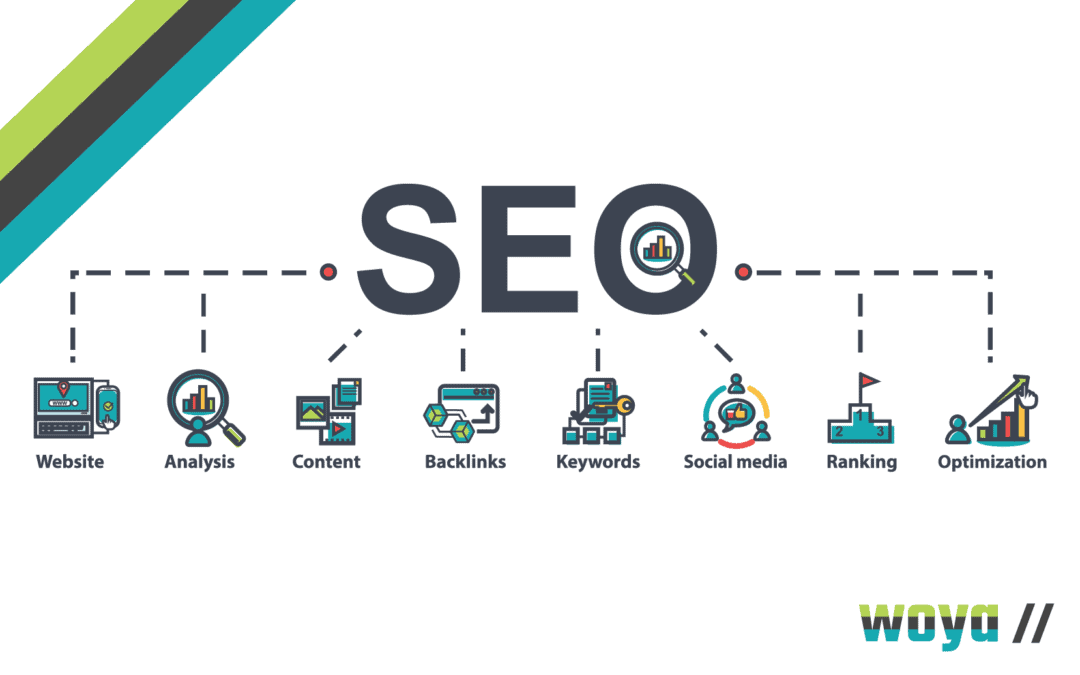
SEO is truly a cornerstone to business marketing in the modern age; and if any organisation wants to find its place online, SEO must form part of their ongoing strategy. With Google facilitating some 3.5 billion searches every day and a market share of over 92%, it makes sense for companies to optimise their SEO efforts in a way to fit the Google algorithm.

However there are different techniques to be used, and not be used – you may have hear the terms ‘White Hat’ and ‘Black Hat’?

What is SEO and why is it important?

SEO refers to Search Engine Optimisation. SEO is the practice of optimising online content through a business’ website, social media or any other presence online. Content can be optimised through the creation of relevant content, through increasing usability and accessibility of a website and through the production of authentic third party comments and links on the business.

SEO is important because when done correctly, it fits the Google algorithm and helps the machine learning behind the scenes to best understand when and where to display a search result based on its relevancy to the search being carried out. This means that when a Google user searches a word or term on the site, they are more likely to see relevant results – and therefore, if they’re googling something linked to your business, your business’ online presence is more likely to be prominently displayed in the Google ranking. This can gain significant competitive advantage over competitors.

In a world where ‘to google’ has become a verb and an everyday way of life for the majority of the population, having a carefully curated presence online that displays when people look up something relevant isn’t a ‘nice-to-have’ business marketing tool – it’s a must.

White Hat SEO

White Hat SEO is a technique used to optimise content online by targeting it and shaping it for a human audience. This means that the content is created for and aimed at relevant users and viewers without the concern of any additional tools used to target an algorithm or Google ranking.

White Hat SEO includes the creation of high quality, niche content, rich in naturally occurring keywords and phrases, the proper construction of links and meta tags, and the organic linking to and from content by appropriate third parties.

White Hat SEO is considered the most ethical and appropriate way to optimise an online presence in order to improve a Google ranking.

Black Hat SEO

Black Hat SEO is the usage of techniques that directly targets search engine algorithms to increase Google ranking position, without the consideration of the human audience who may be reading, viewing or using the content displayed.

Techniques used by those practising Black Hat SEO include keyword stuffing, link farming, spamming and buying followers and likes. Such techniques are used in the hope of ‘tricking’ the Google algorithm into understanding and promoting the content to a higher ranking on SERPs (Search Engine Results Pages).

Black Hat SEO techniques are commonly employed by low quality or altogether false SEO or business marketing agencies who do not intend to deliver on a proper investment.

What does Google prefer – White or Black Hat SEO?

The ethos behind Google is always to deliver the most appropriate search results possible, so Google rankings should be based on real human behaviour and relevancy. Therefore, it is of no surprise that Google favours White Hate SEO tactics over Black Hat SEO tactics.

White Hat SEO sits comfortably within the Google Terms of Usages (Ts & Cs), but Black Hat SEO does not – so technically, those utilising the latter techniques for their online presence are in breach of their user agreement and can be removed from the site altogether. Indeed while this doesn’t often actually happen in practice, the risk is more than the Google ranking priority will be realigned and so the results of Black Hat SEO negative rather than positive for the business.

White Hat SEO is a long-term and continual practice, whereas Black Hat SEO is a quick means to an end rather than a solution that lasts. This means that not only is enacting Black Hat SEO techniques a risk, it is unlikely to ever be effective for more than a short period of time anyway.

So does Black Hat SEO actually work?

It can seem frustrating to see businesses using Black Hat SEO techniques to improve their Google rankings – particularly if it appears to work and list their online presence ahead of those genuinely trying.

However, Google’s algorithms and the machine learning behind them is amongst the most sophisticated in the world; and it is always working to better learn and comprehend human behaviour. We see updates to Google’s SEO requirements every few months but behind the scenes, changes are being made all the time. The most recent update, Google Page Experience, rolled out in May 2021 saw Core Web Vitals being introduced as a Google ranking factor – all of which are based on user experience and accessibility above criteria that can be artificially inflated, such as keywords.

No matter how tempting it may be to purchase a quick and easy Black Hat SEO ‘fix’ service, it should always be avoided. Even if the gains seem positive in the short term, they will never last and in the long term will only detract from a positive Google ranking.

In order to best promote and nurture your business online, only White Hat SEO techniques should be used. If you’re outsourcing any part of online business marketing, it’s critical to ensure that the agency used is only applying authentic White Hat and reputable SEO services – your online ranking, your reputation, and your bottom line, will thank you.

Woya Digital is a digital marketing agency providing SEO and Local SEO solutions that are aimed at getting you to page 1 of Google. We can assist companies of all sizes, anywhere, promote themselves through the internet. Our fixed price offering is straightforward and yields results!


Why White Label SEO is a Winning Strategy for Marketing Agencies

Why White Label SEO is a Winning Strategy for Marketing Agencies

Reading Time: 5 minutes

SEO is such a big deal in the modern business space, it’s also a key offering for marketing agencies.

SEO is something agencies can offer to clients to represent:

  • A comprehensive marketing strategy across all digital interfaces.
  • A long-term commitment to helping their businesses grow.
  • Added value to support other services, such as web design.

The problem is, a great website with zero SEO just isn’t going to cut it – and so it’s becoming vital for so many agencies, even those outside of the marketing sector, to look to their SEO offering to meet demand!

Which is where Woya steps in.

Allow us to explain…

SEO as a Primary Added Value Marketing Service

Ok, so we’re not going to talk about the obvious. Perhaps you know a bit about SEO or indeed know the topic inside out but don’t have the capacity to spend a big chunk of your time working on it!

BUT we will take a moment here to clarify why SEO is such an essential service – and why it’s not going anywhere.

Why IS SEO in Such High Demand?

In the current marketplace, just about every business in every industry needs an online presence.

More and more, that applies even if they conduct no trade whatsoever online. Think about:

  • Cafes, restaurants and take-aways that collate reviews online.
  • Social media platforms, where customer posts and queries are public.
  • Google My Business listings (you’re not on anyone’s Sat Nav without it!).

Those are some basic examples, but you get the idea – if you’re not online, you don’t exist. Particularly over the last year, as the pandemic drove us all inside and closed business doors, we saw a tremendous change in consumer behaviours.

Sure, we had to buy stuff online or order home delivery (because, well, everything was shut), but it’s a habit that seems to be sticking.

Digital is the number one way consumers will check for reviews, compare products, evaluate prices, and ultimately decide where they’re going to spend their cash. In fact, about 81% of consumers research online before making big purchases.

SEO is about so much more than having a significant position in Google rankings! It’s about:

  • Your customers being able to find you – both existing and new clients.
  • Showing up in all the relevant searches for your products and services.
  • Having a professional digital presence that speaks of authenticity and reliability.

We see a massive demand for SEO simply because more businesses recognise the value it brings to their companies.

And thus, our white label SEO offering has exploded, as thousands of marketers, designers, agencies and business services realise that adding SEO to their name is like adding a golden feather to their bow.

How Can White Label SEO Help My Agency?

You can see where we’re going. You need SEO services, and they must be top-notch if your customer is going to see tangible results and see your efforts realised into business profits.

Woya Digital provides a vast range of white label SEO services, whether a comprehensive monthly package, a one-off website audit or a middle ground between the two.

Here’s how it works:

  1. You decide what SEO services you want to offer your clients and set your prices.
  2. We carry out the SEO work for you, white-labelling everything, so it’s good to go – that means your style and branding.
  3. You deliver the results to your client, collect your earnings, and reap the rewards!

It really is that simple.

But What Does White Label Mean – Exactly?

White label means everything we produce, every piece of content, every report, every keyword analysis, and every SEO link building strategy comes from YOU.

If you’re keen to add SEO to your repertoire but aren’t sure to what extent, no worries. We can always have a chat and run through the options that fit your budget – and Woya offers fixed pricing, so it’s your call what you bill your client.

Our white label SEO programmes range from an initial on-site SEO service, including optimisation planning, implementation and reporting, through to ongoing SEO management for the most competitive markets in UK business. Check out our White label SEO page for a bit more detail on the elements included in our packages!

How Can White Label SEO Benefit My Agency?

Crunch time – what’s in it for you? It’s a fair question and something we elaborate on since SEO is such a lucrative way of expanding your services and giving potential clients the nudge they need to jump on board!

We’ve talked a lot here about how essential SEO is to modern business – but we’ve skipped over the tricky bits:

  • Great SEO takes TIME! And lots of it. So many agencies would love to expand but simply don’t have the capacity to assign half of their working hours to it.
  • Employing SEO teams can be highly costly. Like any service, poor SEO is a simple waste of money – but fantastic SEO can profoundly change the fortunes of any company. Therefore, exceptional SEO professionals command steep pay rates.
  • SEO is not a one-trick pony! Here’s the other problem – SEO changes, sometimes very, very quickly. Staying on top of algorithms, indexing, competitors, ranking, bounce rates – it’s all reliant on knowing what’s changing, what’s trending, what’s working – and if you can’t commit to it, even a brilliant SEO strategy can fall behind in a matter of days.

White label SEO services offer a long-term partnership where everyone benefits!

Why Choose Woya for Your White Label SEO?

Experience and skill are critical here – and it’s beyond vital you choose a white label SEO partner who you know has the goods to back up their SEO promises.

Woya is proud to be a market leader in breaking the boundaries of digital marketing, and we’d invite you to check out our Google Reviews to see what our clients have to say. Check out our Portfolio, too, if you’d like a glimpse into the types of clients we’re proud to partner with!

Here’s what white label SEO from Woya can do for you:

  1. Attract higher profits – you pay a fixed fee and decide for yourself what you’ll charge your clients for the additional service.
  2. Expand your expertise – offer a broader range of services, including one of the highest-demand digital marketing facilities modern businesses are searching for.
  3. Drive reputational excellence – we’re experts in what we do (and have the stats to prove it). High-quality SEO sets your agency apart as a business that delivers and stamps your mark on the sector as outperforming all the competition.
  4. Build on customer relationships – SEO is something that you build on and adapt over time. Having that regular dialogue and collaboration with your clients is a great way to cement your relationship and show them just what you can do.

We work with a broad range of businesses, from global enterprises to start-ups, innovators to small traders, and companies breaking into some of the most demanding markets out there – and we always come out on top.

Like what you’re hearing and want to learn more about how white label SEO can transform your agency offering? Get in touch – it’s what we’re here for!

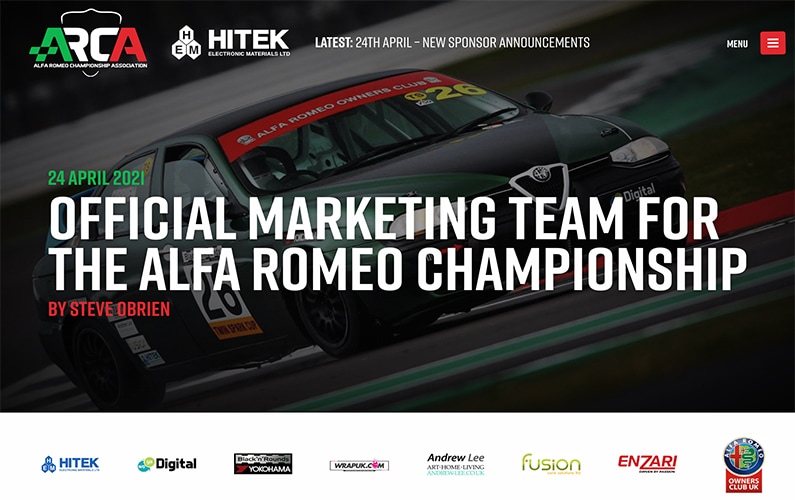
Official Marketing Team for the Alfa Romeo Championship 2021

Official Marketing Team for the Alfa Romeo Championship 2021

Reading Time: 2 minutes

The HITEK Electronic Materials Alfa Romeo Championship is delighted to be continuing its journey with Woya Digital into a new 2021 season.

The Championship which enters it 40th consecutive racing year is bucking the trend to expand in all categories from registered drivers, sponsors and all essential followers in person and across social media.

With the lure of both modern and classic Italian machinery, the Alfa Romeo Championship has always gathered much interest. This year beckons two Italian festive invites at Brands Hatch and the iconic Croft Circuit.

Woya Digital is a digital marketing agency specialising in online marketing, SEO and lead generation. As digital marketing experts, they cover many business sectors, but have a focus on motorsport marketing and igniting motorsport sponsorship. They continue to work with the Championship to maximise the potential in 2021 after a previous successful year.

Managing Partner, Natalie Karr commented “It’s fantastic to be supporting the HITEK Electronic Materials Alfa Romeo Championship again this season. It provides a genuine fit to our growing automotive and motor racing portfolio. 2020 wasn’t the year that anyone hoped for, but with so much optimism we move forward.”

“The challenge for UK motorsport continues.” Championship Co-ordinator Andy Robinson commented. “We still constantly balance driver entry levels, motorsport sponsorship and the attraction of new spectators on all emerging platforms. These are the key elements for all levels of motorsport. After a promising year, the Alfa Romeo Championship has extended our relationship with digital marketing and motorsport enthusiasts Woya Digital for 2021.”

ENDS

About Woya Digital

West Sussex based Woya Digital is a digital marketing agency comprising of experts in respective marketing fields with a main focus on SME business growth. This is achieved through affordable, integrated digital marketing methods such as: lead generation marketing, essential SEO and designing fully optimised websites.

www.woya.co.uk

About the 750MC – Alfa Romeo Championship

With 40 years of racing history, the Alfa Romeo Championship features a grid spanning a huge variety of different models from the Italian marque, as well as allowing competitors with Fiat, Abarth and Lancia machinery. Three main classes (Modified, Power Trophy and Twin Spark Cup) cater for the different models in addition to the Italian Invitation class, meaning that grids include everything from a 33 to a Mito. The 750 Motor Club offers the UK’s best value racing with a continual drive to offer the highest quality competitor experience and paddock for the club-level driver, as well as a host of other benefits to suit both novice and experienced racers.

www.alfaracer.com


Successful On-Page SEO: Top 10 Elements

Successful On-Page SEO: Top 10 Elements

Reading Time: 6 minutes

SEO services or search engine optimisation is more complex than ever before, especially on-page SEO. It is no longer a simple process of marking various things off of a pre-determined SEO services checklist.

Woya Digital’s successful search marketing for our pay monthly SEO services involves the use of 10 important on-page SEO elements that are extensively understood and properly implemented.

What is SEO?

SEO is an abbreviation that in full means ‘Search Engine Optimisation’. Optimising web content for search engines is a marketing discipline within itself (cunningly enough known as search engine marketing). The practice of SEO refers to the optimisation of content on a website so that it can be easily judged on its relevant, appropriateness and importance by search engine programs – meaning that it is ranked high in the SERPs (Search Engine Results Page) when a user searches for a relevant word, term or phrase.

Search engine marketing and SEO practices are often just focused on Google, as it’s by far the world’s largest and most used search engine, but in broad terms, optimised content prioritises websites across all search engines.

What are The Benefits of SEO?

Searching for something online when they need more information is second nature to a huge chunk of the world’s population.

Google alone processes some 3.5 billion searches every day, and with mobile devices and apps at the fingertips of an increasing number of people, the world wide web is more accessible than ever. In order to cut through the ‘noise’ on search engines, businesses must differentiate themselves from their competitors and other, similar, companies – and good SEO can allow them to appear in search results above others; making them considerably more likely to receive traffic and convert that traffic into their desired action (an online purchase, filling out a contact form, etc).

What’s the Difference between On-Page SEO and Off-Site SEO?

SEO comes in two forms: on-page SEO and off site SEO. To some extent, those working in search engine marketing have power over both, but the latter is maintained through indirect control.

On page SEO is everything that can be controlled within a business’ website or web page to influence its search engine relevance – such as keywords, tags, page load times and core web vitals. Off site SEO refers to other websites reinforcing a page’s relevance – through backlinks and mentions.

Top 10 Factors of On-Page SEO

There is lots that can be easily tweaked and changed in order to better optimise your content. These ten areas are easily influenced and quickly improved.

1. Title Tag

The title tag, which is basically a short description of 60 characters, is used by the website visitors and search engines as the identifier.

The title tag itself, placed between <HEAD> and </HEAD> tags near the very top of the HTML code for a particular page informs the search engines what the page is about. Together with the Meta description, the title tag is the representation of your business in Google and search engines.

2. Heading Tag and Keywords

Heading tags are simply the headers that are used on a website post to divide it into different sections. The Heading tag is the main heading that comes after the title on any given webpage. The use of the main keywords that help define a target in the Heading tag is one of the most popular on-page SEO services and techniques because it helps to improve the visibility of your website in a search engine.

3. Subheadings and Keywords

Headers are not limited to just the main or focus heading. There are up to 6 different header tags that can be used in any given website. Each specify and outline a different aspect of a post.

The heading tags from number 2 and onwards are all known as subheadings. It is encouraged that each subheading, especially the first three includes the main keyword for for increased SEO ranking. Using subheadings to break up long passages of text gives an extra opportunity to demonstrate the topic the copy is about and to increase its readability by making it easier to consume in short, sharp chunks. Formatting copy this way encourages the reader to continue reading and to stay on the page for longer.

4. ALT Image Tags

An ALT IMG Tag is the abbreviation to the ALT attribute to an IMG tag. The ALT tags are the alternatives to the text that are added to images in case the browser is unable to properly render them. It is a way for SEO services marketers to ensure that the search engine associates a websites main keywords with related images to strength their search rankings.

The use of ALT tags on images is one of the most successful on-page SEO strategies. Especially for web-stores selling their products online. This practice ensures that the products show up on the Google image search as soon as the keywords are entered in the search bar.

5. Keywording the first 100 Words

Most websites include a long and detailed introduction at the beginning of their posts, only choosing to mention their focus keywords much later and further down, and then they complain that their SEO services and SEO rankings are not working.

That is because the later a keyword is introduced in a post, the longer it takes for Google to recognise and understand what information is being presented on your website. As such, for optimal search engine optimisation it is essential that the main keywords be introduced within the first one hundred words.

6. Website and Server Speed

According to Google, the server speed, website and page speed are taken into account by the ranking algorithm. A slower page means high rate of abandonment, loss of links, and decreased visitor engagement, making it a critically important factor to take into consideration when marking an on-page SEO strategy.

The most recent updates to the Google algorithm include a focus on the time it takes to load pages on a website; across desktop PCs, laptops and on mobile devices. This will prioritise those sites that load quickly over those that don’t, in order to keep quality web content as accessible as possible. To ensure the pages on a site load fast, image resolutions and sizes should be reduced and any excess content and coding removed.

7. Mobile Friendliness

It’s estimated that around 60% of Google searches are carried out on mobile devices, so it’s critical for businesses that their websites work on differing devices. Such compatibility across devices is known as ‘mobile responsiveness’ and allows a site to load optimised to the device it’s being loaded on; in different sizes, formatting and layouts. As a result, Google (and other search engines) prioritise search results for websites that display well across differing mobile devices – after all, if users don’t find a site they can navigate well on their mobile through Google, they’re unlikely to use it to make the same or a similar search again.

8. User Experience (UX)

When a user visits a website, they need to be able to quickly and accurately find what they’re looking for and navigate the site easily. This is known as User Experience, and commonly abbreviated down to the letters UX.

User Experience Optimisation is a practice in itself, and one that’s ever-evolving as technology develops. However, there are some quick and easy steps that can be taken by businesses in order to improve their UX standards and in turn, their SEO.

If a business’ desired call to action is for a customer to make contact, they can display contact details on every page of their site in a prominent position in order for them to be easily spotted. Similarly, small contact us forms can be added for easy form-filling. Menus and headings should be easily named and categorised so that they’re as simple to navigate as possible. Simplify fonts to make them as uncomplicated as possible and ensure text is well formatted, short, snappy and of an appropriate tone to the audience.

9. E-A-T

E-A-T is an abbreviation that stands for Expertise, Authoritativeness and Trustworthiness. Although not a direct ranking factor, if businesses intend to take on the position of an industry expert or thought leader in a certain sector or topic, E-A-T is something that needs to be considered through all content creation. In order to demonstrate all three, the content on a website should be able to demonstrate to search engine programs that it is:

  • Well informed and explained in relevant language
  • As correct and accurate as possible
  • Written by or supplied by a qualified person
  • An independent source of information
  • Trusted by others as a source of information
  • Citing other trusted sources of information.

This can be tricky to navigate but if the focus is on producing good quality copy and content, then it should come as a by-product of that already being produced on the site.

10. Website Security (HTTPS)

As part of its commitment to user safety, Google includes website security as a ‘ranking factor’ when it comes to deciding how to present search engine results. This means that websites with good security protocols will be ranked higher than those without.

HTTPS is a secure connection – encrypting the connection between user and website so that no one is able to intercept and acquire any of the data shared between the two. HTTPS (rather than just HTTP, as typed in a web browser) demonstrates that the website being visited has an SSL Certificate (Secure Sockets Level Certificate). This isn’t actually a certificate at all, but rather a small piece of code that encrypts data privacy.

HTTPS is now the default security level for new websites being set up, but older sites may not have yet switched across. Most web hosting facilities offer SSL Certificate implementation for just a nominal fee. Moving from HTTP to HTTPS will have an immediate impact on both search engine ranking and consumer trust, as it illustrates a commitment to data and user privacy.

On-Page SEO Support

Woya Digital is a social media marketing agency offering SEO and Local SEO solutions that are aimed at getting you to page 1 of Google. We can assist companies of all sizes, anywhere, promote themselves through the internet. Our fixed price offering is straightforward and yields results!

How SEO Works: Simplified

How SEO Works: Simplified

Reading Time: 6 minutes

The three letters SEO are known all too well by those working in digital marketing, but often remains the domain of technical specialists and so misunderstood by others.

The acronym SEO stands for Search Engine Optimisation, which is indeed a technical practice, but there are vast benefits to it being understood by everyone in a business – especially where business owners are looking to pay for (or already pay for) SEO services.

While there’s really no need for everyone to comprehend the technicalities behind SEO, the basics can be helpful and so here we drill down to the foundations of SEO practice and take it step-by-step to help explain how SEO works, in an easy-to-understand way.

What is SEO?

SEO is the process of optimising content on a website so that the machine-learning algorithms behind search engines are able to identify their relevance and presence, placing them as high up on SERPs (Search Engine Results Pages) as possible.

When we talk about SEO, we are primarily referring to the optimisation practices required to best boost a website’s exposure on Google. This is because Google holds (by far) the majority market share in most countries and territories when it comes to visitors, and so it drives more traffic than its competitors.

That said, there are areas worldwide where Google is not the most popular search engine – but, broadly speaking, working on SEO for Google will not inhibit the performance on other search engines and so activities can be enacted no matter the specific focus.

When A User Searches

For the maximum efficiency, digital marketing departments should link their SEO actions to every point of the search process. First, a user performs a search by typing their query into a search engine – usually a keyword or phrase, but occasionally a full question. Immediately, they are then presented with results deemed appropriate by the algorithm; and that are hopefully helpful to answer the query made.

In order to judge the order in which the results are ranked on the SERPs, there are two main factors considered by the search engine’s AI:

  1. Relevance – the search engine must be able to scan through the content on the page and judge it to be appropriate to the user’s search term. Where the keyword or phrase has more than one meaning, it should be the appropriate one for the intended query; which can be a challenge for machine learning.
  2. Authority – the search engine must be able to judge that the webpage (and overall site) that it is directing to must be trustworthy and safe for the user to visit.

How to Demonstrate Relevance and Authority

A business’ web content must demonstrate its relevancy and authority in order to rank on search engine results for user searches made appropriately to the theme or topic.

In order to demonstrate relevance, a website’s content must clearly demonstrate its overarching theme, topics and niche. Search engine’s programming determines this through its content including words, keyword usage, meta tags, videos, imagery and comments.

This allows the machine learning to build up a picture of what the site is about and who it would be relevant for.

This makes it critical for websites’ content to remain relevant to its key theme or topic, to be presented in a way that is appropriate for the audience and to be useful enough that it can be easily shared. Those producing web content for the site must ensure that relevant keywords, phrases and language is used throughout all published content and copy – and in technical areas such as tags and names.

In order for a website to demonstrate authority, it must appear genuine and trustworthy. This is most commonly demonstrated through safety and security authentication as well as links from other sites (and links to other sites) appropriate to the theme.

If other domains online deem the site relevant and honourable enough to link to, a search engine will take that to be a positive reference and endorsement of authenticity, appropriateness and trustworthiness.

The Two Main Types of SEO

There are two primary types of SEO:

  1. On-page SEO ­– SEO activity that it is carried out on a webpage and is created and curated by the business.
  2. Off-page SEO – SEO activity that is carried out on other websites linking back to it.

On-page SEO is usually the first port of call for those looking to improve their exposure on search engines.

This includes, but is by no means limited to:

    • The basic coding of a page should be well tagged with keywords and phrases used
    • Site architecture should be easy-to-navigate with a comprehensive site map in place
    • Content should be published that is relevant, engaging and shareable
    • Links between internal sources should be clearly marked and functioning correctly
    • Images must be appropriate to the site’s theme
    • All content should load quickly and be well accessible.

Once a site’s basic SEO functions have been optimised, a business can turn its focus to off-page SEO. Generally speaking, this includes, but is not limited to:

    • Links put in place to the site from others (preferably from high-authority sites)
    • PR and social media campaigns launched to generate interest and discussion of the brand
    • Facilitation of reviews on third-party websites mentioning or linking back to the site.

Both on-page and off-page SEO combine to help best demonstrate to search engine algorithms the appropriateness of ranking a site well when certain queries are made by users.

While on-page SEO should be managed first, the impact of off-page should not be underestimated and will contribute toward the overall efforts made, particularly when it comes to demonstrating the authenticity and authority of the site to the search engine algorithms.

Check out our SEO packages for smaller businesses

Judging SEO Success

There are several measures by which businesses can judge the success of their SEO efforts – but it must be noted that all SEO activities should be enacted on a ongoing basis and not as a one-off piece of work.

How to monitor the continual progress of SEO work is often misjudged by those who don’t understand how it all works – it can be more complex than expected!

Domain Authority

Every website has a DA (Domain Authority). A DA is a score given to a site numbered between 1-100 that ranks how likely it is to show up highly on SERPs, typically with 1 as the lowest and 100 as the highest.

Exactly what is considered a high score varies between industry but generally speaking, anything above 25 can be thought of as good. Positive and fruitful SEO efforts will elevate a website’s DA score and so this improving over time can indicate progress made.

It is worth noting, however, that DA (and indeed, further search ranking) is impacted heavily by the age of a domain – as search engines are unable to build up a picture of authenticity or reliability on an immature website. This may disadvantage new businesses in the short term but the DA score will soon build and rankings improve.

Search Rankings

Perhaps the most notable example of SEO success is the SERP ranking presented when you type in a relevant query. However, this used as a measure of success in the simplest term does not work as accurately as many would assume – because there’s a lot more at play when it comes to displaying search results than most think!

While search engine rankings are what is being targeted with SEO work, it is not often that any two people typing in a matching query will be met with the same rankings. This is because the search engine takes into account the person’s search history, location and personal settings when presenting results – and so a quick check often won’t highlight the most accurate ranking.

There are specialist tools that can be used to judge the ranking of a website. It is always recommended that businesses use specialists in this space rather than trying to search for their own sites in order to avoid influencing traffic levels inaccurately.

What’s more, specific specialist services will be able to advise on areas for improvement as well as a more direct picture of action vs influence when it comes to DA improvement and SERP exposure.

Combining this with other factors such as paid-for advertisement placements, backlinking strategies and PR campaigns can help hugely improve SERP performance as well as positive public perception and brand image.

While SEO efforts are often best left to specialists in the field as well as technical web experts, there is benefit to everyone in a business understanding how and why it works. This allows for everyone to do their bit and play their part to contribute toward a wider positive public perception of the brand; both online and off.

Core Web Vitals Google Update – Coming May 2021

Core Web Vitals Google Update – Coming May 2021

Reading Time: 4 minutes

The working world all but ground to a halt in 2020, but some businesses were better equipped than others to keep running and delivering their products and services. One such business was Google, and in some ways, they have truly benefitted from more people being at home and browsing online – because more searches equals more data, more data impressions and more to work with.

Google are continuing with their usual regular Google update schedule through 2021, it’s to be expected. The most recent update which has been publicly announced is to take place in May 2021, and there’s one major change – relating to Core Web Vitals.

What Are The Latest Google Changes?

The May Google update was technically announced in May 2020; it’s just that now they’re giving a date to it going live.

This change refers to the way Google ranks searches and is updating its criteria for high rankings to include page experience signals; that is, the way a website’s pages work as well as the content they include. Three of these signals are ‘Core Web Vitals’ and the other three are UX (User Experience) metrics.

This essentially means that websites are no longer just given a high ranking based on their content’s quality, quantity and relevancy, but also on its user experience. Whilst not completely confirmed yet, it’s also planned that Google will offer some kind of visual representation next to results who perform well on Core Web Vitals metrics – likely a small icon or different colour result.

The Google Core Web Vitals update means that if not already included in digital marketing strategics, marketers and developers need to move to include the optimisation of webpages into their plans, in order to stay well-ranked for those searching for them, their industry, their niche and their products or services.

What Are Core Web Vitals?

Google’s Core Web Vitals are three metrics that measure the performance of a webpage. These metrics are:

  • Speed of loading – The LCP (Largest Contentful Paint). This measures the time it takes for the main content on any given page to load. The ideal LCP for a Google ranking needs to be quicker than 2.5 seconds.
  • Interactivity opportunities – The FID (First Input Delay). This measures the time it takes for a page to become interactive. The ideal FID for a Google ranking needs to be less than 100 milliseconds.
  • Visual layout shifting – The CLS (Cumulative Layout Shift). This measures the amount of unexpected shifts of page layout, if any. The ideal CLS for a Google ranking needs to be less than 0.1.

What Are Ranking Signals?

Ranking Signals are all of the signs that a website gives to Google in order to justify and assert its place in SERPs (Search Engine Result Pages). There are many of these, and each tells Google’s algorithm what a website is about, how current it is, how relevant it is to various search terms, and how trusted it is, amongst other things. In the case of Google’s May 2021 update, the Core Web Vitals will be joining four existing Ranking Signals related to UX. These are:

  • Mobile responsive – how quick and well formatted the website is to smaller device access
  • Safety measures – that the website doesn’t include any deceptive or malicious code or threats
  • HTTPS security – the site is secured and delivered over HTTPS protocol
  • No intrusive interstitials – that the page is optimised for easy accessibility

Why Is This Google Update Important To Businesses?

Google is the biggest search engine in the world and appears in many forms other than just on google.com – so if a business’ web presence is likely to fall down the rankings as a result of Google updates, it needs to be rectified, quickly. At present, only around 15% of websites would fit the new guidelines well, but that’s not to say that the standards are unrealistic.

Businesses can view this Google update as an opportunity to improve; not just up search rankings but also in their wider UX online.

What Can My Business Do In Preparation For This Google Update?

Google had released tools for businesses to prepare for this update back in May 2020, but they’re still available to access for any who haven’t implemented them already.

If work into preparation for the Core Web Vitals update is not already underway by your digital marketing team, it needs to be begun as a priority. If you don’t have a specialist supporting you with your business website, our web designers at Woya Digital would be more than happy to help!

Google’s Site Console report for Core Web Vitals allows businesses to gain a basic overview of website performance against the key three metrics, to highlight any areas for improvement and offer explanations for any issues. From here, the PageSpeed Insights and Lighthouse tools can help to fix any identified issues. What’s more, web.dev has a whole directory of tools relevant to identifying and improving website performance related to Google Core Web Vitals.

AMP (Accelerated Mobile Pages) is another, albeit now external to Google, tools for businesses to improve on UX metrics with their websites. Businesses who are existing AMP Publishers can use the new AMP Page Experience Guide for diagnostic advice relating to Google Core Web Vitals. Google continues to support AMP content in its search results and says itself that the AMP software helps users “achieve great page experiences”.

Why Do Google Keep Making Changes?

Google has always been focused on being the best search engine in the world. That aim is continuing even through their market dominance.

Every time a new search is made on Google (and that’s about 3.5 billion times a day), their developers gain new data on how best to optimise results and improve their search experience – and including Core Web Vitals in their ranking signals is another way to do just that.

Woya Digital is a digital marketing agency made up of experts in our various fields. With a Woya Pay Monthly Website Package, we provide you a rapid solution to refresh your online presence and really impress! We make business growth through digital marketing, affordable for any business!


The Value of Good Marketing Content 

The Value of Good Marketing Content 

Reading Time: 4 minutes

The marketing sphere is changing and evolving all the time in line with new technologies, and now more than ever, with consumer expectations and appetites.

Amongst the buzzwords and terms we all hear banded about online, two words in particular are front and centre right now: content marketing. Also known as marketing content. Or just content!

Yet ‘content’ now seems to be such a popular word that it’s being used in industries outside of traditional marketing and even by those you may not consider to be ‘businesses’. But what does it really mean and why is it so important for marketing? Let Woya Digital reveal all…

What Do We Mean By The Word ‘Content’, In A Marketing Context?

The word ‘content’ in the relevant context means literally “substantive information or creative material”. It is this that those discussing the word in a digital marketing lexicon refer to, and in particular, material online that can be used as part of a marketing strategy to draw attention to the relevant brand and its products, services or experiences.

This includes, but is by no means limited to, written articles and blogs, videos, infographics, e-books, online events, webinars, podcasts, case studies, how-to guides and e-mail newsletters.

Content isn’t just used by traditional businesses for digital marketing practices, but also makes up the base strategy for social media influencers. Essentially, everything they produce is content, to promote both themselves as a brand and to promote the products or services of brands who have employed them. The word is probably the most prevalent in this sector and so the public who follow social media accounts of this type are more aware of it than most.

What Is Content Marketing?

Content marketing is a specific digital marketing practice that focuses on the creation, publishing and distribution of content in order to attract, retain and sustain a targeted audience.

Online, this works primarily to attract audiences and generate leads through customer base expansion. The content shared through content marketing is usually accessed for free, although when the brand has built its reputation sufficiently, paid-for options offering further value are often added as additional income generation streams.

In order for content to be used as ‘marketing content’, each piece of it needs to be created in line with the brand appropriate guidelines so that it is instantly recognisable, consistent, fits the right look and feel for the business and is targeted to be considered of value for the audience. Content marketing should always begin by identifying a customer want or need, and providing content to fit it.

Why Is Content Important for Marketers?

Content marketing is of increasing benefit to businesses online for several reasons.

As far as marketing specialities go, content marketing is very time-consuming; but the benefits far outweigh the investment.

Marketing Content is an evergreen asset.

Once created, content never goes away and can be reused and repurposed time and time again to remain current and up-to-date. It’s a digital marketing asset and can form part of a larger suite of marketing materials to be used as and when required.

Content can prompt customers through the sales journey.

Like all marketing materials, content should always come with a call to action. If created sufficiently to fit a customer knowledge gap, want or need, content can position a brand as experts in their field and give added perceived value to any purchase made with them.

Marketing content acts, therefore, as a prompt to move along the sales process in a subtle manner – unlike more direct sales tactics that are often disliked by consumers.

Content boosts SEO efforts.

Everything produce digitally for a brand should be created with search in mind.

When marketing content is published and shared online, it works to build digital presence, establishes authenticity as an industry thought leader, builds reader/user trust and helps to attract, educate and nurture leads – all of which give a boost to a business’ SEO (Search Engine Optimisation). In turn, brands with good quality content being shared can expect to attract more organic traffic to their digital presence; be that a website, social media profile or other content channel.

Content can be shared widely.

Searchable content is key for message amplification, and consumers love it – after all, what could be more authentic than something someone believes in or enjoys enough to share onward with others?

When third parties and other consumers share a brand’s content, it widens the audience and directs more people to the business as well as increasing the reputation as an industry or topic expert. One of Google’s key measures as to how credible a source is, is to crawl those linking to it and sharing its content, so this too gives another angle of SEO benefit.

Marketing content is much more likely to be shared onward than traditional advertisements, as it contains a perceived value to the consumer and so in turn, the shares expand the marketing effort onward.

How Does My Business Get Started In Producing Marketing Content?

To get started in content marketing, first identify customer needs, wants or information gaps. Do your potential customers misunderstand a related business topic? Do potential customers know the risks of not using a certain product or service? If a brand is able to explain in easy-to-understand terms aspects and topics of their industry to consumers, content can be created around it and this can be published and shared.

Content does of course, need to fit the overall marketing strategy and business goals, amplify the existing marketing messaging – and should also be presented in a manner that suits the target audience.

If you’re looking to make a start on creating and publishing marketing content, or would like support with content strategy and creation, the Woya Digital team are here to help. Sitting at the forefront of content creation, we’re able to utilise our experience across various industries and disciplines to produce content that attracts, converts, and better yet – delights!

Why White Label SEO is a Winning Strategy for Marketing Agencies

Woya White Label SEO Services

Reading Time: 5 minutes

Whether you’re a web developer, digital marketer, designer or content manager, you already know how vital SEO is to everything we do online.The challenge for many businesses is that SEO is complex, varied, and requires expert knowledge.

Offering a professional SEO support service isn’t just a great way to expand your audience reach, and add value for your existing clients. It can also boost your services by delivering tangible, quantifiable results that back-up the work you specialise in.

So, what’s the best option if you’re considering adding SEO to your offering, or want to upgrade your client services?

  • Employ a fully trained, skilled and experienced SEO expert, or team of staff.
  • Undertake appropriate qualifications to upskill, with regular updates as standards evolve, algorithms change, and your clients grow.
  • OR – consider Woya White Label SEO Services

Here we’ll run through the benefits of adding SEO to your repertoire, and why a white label SEO service is a cost-effective, bespoke choice that will transform your returns.

Why is SEO Such a Sought After Service?

Simply put, business thrives and dies online.

A study published last year to try and clarify how important digital traffic is to business success found that:

  • An incredible 93% of website traffic arrives through a search engine – so, if your clients are not ranked, or are difficult to find online, they might be restricting their business to just 7% of the potential market share.
  • Marketing agencies who offer clients a combination of organic and paid search engine advertising generate 25% more clicks and a 27% higher return on investment. Therefore, if you design incredible websites, or put together awesome advertising campaigns, you NEED outstanding SEO to realise the achievable returns!
  • There are around 70,000 searches on Google every second of the day. We all know that there are many search engines, but given that Google has the lion’s share of the market, to get in on that action, your clients need a fast-moving SEO strategy to keep pace with the demands of a fluctuating algorithm.

These stats are just a snippet of the data out there – but quantify some of the key reasons businesses and self-employed professionals are crying out for SEO that delivers. 

Benefits and Applications of our White Label SEO Services

As we summarised at the start of this article, you have a few options when it comes to adding SEO to your catalogue.

For many digital service providers, particularly freelancers, small businesses and agencies, the costs of employing a full-time SEO team are unviable. Costs include:

  • High-level salaries for the most skilled SEO professionals.
  • The need to have a varied team to cover all SEO applications depending on your client base’s needs.
  • Regular training refreshes and courses as SEO best practice changes.

SEO isn’t always straightforward, and to achieve the best outcomes requires diligence, time, professional strategising, and continual oversight to evaluate performance and make tweaks as needed.

Therefore, it isn’t just a case of hiring an SEO employee. To deliver real results, you need to invest substantially in allocating time to that crucial service area. White Label SEO offers a streamlined solution, to allow you to offer best in class SEO to all of your clients, without any of the extra outlay, and all of the returns.

  • You commission Woya as your white label SEO provider to carry out defined services, according to the packages you sell to your clients, all delivered under your branding.
  • Access to a team of highly experienced SEO pros at the top of their game – offering their services to your clients through your business channels, at a fraction of the cost of employing a similarly qualified team member.
  • Fast, tailored SEO services adapted to your business sector.
  • Cost-effective packages, enabling you to expand, change, or reduce your SEO service offerings, with zero impact on your bottom line.

You can offer SEO as an add-on to your existing work; for example, as a web developer, you might provide a premium package to include a website audit, and have the opportunity to position yourself as a serious competitor with a full-service offering.

Some digital marketing businesses require a comprehensive SEO option, all of which can be delivered on a white label basis, with you retaining direct communication and relationships with your clients.

Prices are all agreed in advance, and flexible depending on your workload. Therefore, you can pick and choose what SEO you want to offer, price up your services accordingly, and have complete control over your profit margins.

White Label SEO Packages for Businesses 

We know that all businesses are busy! Your bottom line matters, your time is limited, and you need fuss-free solutions to meet your business growth aspirations.

To make the process as straightforward as possible, Woya offers a selection of white label SEO packages to choose from. It’s up to you whether at any point in time you’d like us to take over a piece of work if deadlines are working against you, or if you’d prefer to retain any particular task.

Some of our most popular white label SEO packages include:

  • Initial On-Site SEO, from £390 per month for three months. Ideal for new clients, to cement your relationship and build on their opportunities for success! SEO includes crafting a solid optimisation plan, implementing the vital actions, and providing white label reporting, under your business branding.
  • Standard Markets SEO, from £1095 per month. You’ll need this package for clients competing in regular market conditions who need an ongoing, dedicated SEO service to carve out their market share, provide continuous improvements and growth, and evolve as quickly as the business climate changes.
  • Competitive Markets SEO, from £795 per month. If you work with clients in an area of rapid growth, heavy competition, and huge potential profits, your SEO needs to pack a punch to make a difference. Woya works on behalf of clients in some of the most lucrative industries, providing ongoing, dedicated support across all SEO areas.

Woya offers the full spectrum of SEO, so whether you’d like to add an SEO link-building service to your marketing packages, need a professional to take over client communications to get their SEO on point, or would like ad hoc services to avoid signposting a valued client to another business, we’ve got your back.

The Woya Difference – Reseller SEO That Makes Sense

We’re not your typical SEO agency.

  • We don’t create limiting, off-the-shelf packages that have a minimal capacity.
  • We don’t offer SEO that ticks all the boxes but doesn’t add up.

What we do is maximise business growth, throwing the weight of our years of market-leading SEO expertise to deliver the ultimate returns for your clients, at an affordable price to your business.

Our team is continually expanding. We have a large team of pros who work around the clock to dramatically improve businesses online visibility, and create a digital presence that stands out from the crowd.

Woya works with clients of all sizes, offering white label SEO to enhance your business scope. From freelance web designers to established marketers, new businesses who want to create a compelling service offering, to experienced digital marketing teams who would like to improve their SEO services, without putting a massive strain on their budget.

Check out our white label SEO service reseller packages online for more detail about what’s included – or give us a call for a chat to see how we can support your business!

Content Creation Tips for Every Step of Your Funnel

Content Creation Tips for Every Step of Your Funnel

Reading Time: 6 minutes

When it comes to the art of digital marketing, we often work clients who haven’t heard of the terms we use and don’t necessarily know how to leverage each step of the customer experience to drive sales.

We have created this article not only to explain why every step of your “funnel” needs to pack a content punch, but what it all means – and why it’s enormously valuable for you to understand as a business owner.

You hear a lot about content creation, particularly in this visually focused age where innovative graphics are the norm, however content isn’t just for marketing and sales. It’s also about building relationships and trust with your customers, establishing yourself as an expert in your field, as well as encouraging engagement and growing brand advocates.

Why a Content Strategy is a Secret Business Weapon

To kick things off, we’d like to introduce the concept of a content strategy. It sounds pretty serious, but doesn’t have to be mind-blowingly complicated, and you can start with a short-term calendar of content and build on it as you go – or dive right in with a strategy that covers the next 12 months!

Strategising is the key to all great marketing.

Think about:

  • What do you want customers to think of when they think of you?
  • What values does your brand stand for?
  • Who is your key customer, and what sort of content resonates with them?
  • Where do they look for information? What mediums will help you meet your customer on his or her own terms?

In essence, a content strategy means that you have worked out your key business priorities, and put energy into fleshing out those objectives to identify how you’re going to go about content creation that will help you reach your audience, step-by-step. But, circling back, you can’t create a content strategy until you have established your funnel!

The word “sales funnel” always sound a little cold. Still, the reality is that every brand, every business, every company that engages in any sales and marketing does have a funnel; even if they don’t realise it!

The funnel is the journey your customer goes through, from first hearing your name, to becoming a loyal follower.  This theoretical funnel is made up of specific steps that your customer will move through, but the key is to focus on each step individually and for the purpose of content creation, create content to nurture and move your customer on to the next step in the process.

How are Funnels Essential to Driving Business Growth?

As an example, we’re going to work through a sales funnel, to illustrate what that customer experience might look like.

  1. To start with, we’re not going to try and force a customer into buying a product (nor would that work!). Instead, we’re going to introduce ourselves, establish a presence, and get our name out there to build awareness.
  1. Next up, we want that customer to consider us as their next port of call when they need something. Alternatively, we tell them what problems we solve, and establish ourselves as the experts who can help.
  1. Yep, that’s right; all businesses are real people, with real personalities, and real thoughts. Engagement isn’t just telling people who you are, but listening to them! Ask your audience what they like, what they don’t, what they think, how they feel – get a  conversation started that values any contribution they would like to make.
  1. So, you’ve connected with a customer, and they’ve bought a product. Great news! The next step is just as important as everything that’s come before – retention. You don’t work this hard to sell one product, or one service, to one person. You want them to rely on you to deliver the good stuff and keep coming back for more.
  1. Once you’ve reached this stage, it’s essential to retain that customer and to connect with them at the right level to cement your relationship. This stage is about your customer becoming your advocate, and being happy to share their positive experiences with other potential new customers; who start right at the beginning of your funnel.

So, this is a very brief rundown of the critical steps in the funnel, and why you need to build up through the stages to secure sales.

Why Skipping Content Creation at any Funnel Stage is Disastrous

You probably see where we’re going here; EVERY step of the funnel is fundamental.

Content creation doesn’t solely mean videos, website content, newsletters, follow-ups, messages, social media images, blogs, emails, marketing ads. It is all of these things, working cohesively to engage with your ideal customer base, and showcase what you have to offer.

Once you have established your funnel, what you’re doing is breaking down the steps that every customer will take before they decide to spend their hard-earned cash with your business, and then afterwards too. Your content creation strategy should be built around your funnel, and the funnel provides you with a good framework from which to work and help you to make sure that you deliver valuable, interesting, engaging content at every touchpoint.

How to Create Great Content at Every Stage of Your Funnel

It’s easy to use phrases like ‘content strategy’ and ‘sales funnel’ – but for a lot of businesses, particularly SMEs who perhaps don’t have a marketing guru on their team, it’s not always quite so obvious or straightforward.

This information is to help you create a standout content strategy and guide you in your content creation, so let’s work through each step of the funnel, and think about what content we might create that would help us work towards those overarching objectives.

  1. The top of the funnel – ATTRACT – Build Awareness

Building awareness means you want to increase the visibility of your brand. This is not a step for pushing sales, but rather for introducing your business, sharing advice or solutions, and generating leads.

  1. Publish blogs to educate, guide and provide solutions to problems
  2. Share social media posts with tips or info
  3. Share ‘how to’ videos
  4. Share checklists
  5. Create downloadable guides with lead generation forms
  6. Share a signup for your newsletter with lead generation forms

Step Two – CONVERT

In this step you want your customer to consider using your brand. It establishes you as the business that can solve a problem (even if it’s a problem they didn’t realise existed!).

  1. Make good use of CTAs (Calls to Action) – make it easy for your customer to ask you a question, learn more, download a guide, and send you a message. One-click is ideal!
  2. Focus on your website, populating it with relevant, informative content.
  3. Think about SEO, and optimise every element of your digital presence to make it easier to find, and higher ranked
  4. Invite customers in the door to get to know you, with blog posts that explain what you can offer
  5. Keep creating engaging social media posts

Step Three – ENGAGE

Now we’re in the conversion stage of the funnel – you’ve worked consistently to reach this point, so let’s keep going!

Here we need to solidify everything your customer knows about you, and leave no doubt that you’re the business they need.

  1. Concentrate on your website UX (user experience) – how many buttons do they need to press to add something to their cart?
  2. How quickly can they find the information they need?
  3. Do you have a published FAQs page with all the critical answers about delivery lead times, packaging, payment terms and anything else relevant to your business?
  4. Do you make it easy for a customer to sign up, register, or buy? Use CTA buttons, instant links, and make sure the content and pop-ups at every stage of that process are perfectly aligned with the brand image you have created.
  5. Do you have a mobile optimised version of your website? Can customers buy something from you with one-click through social media?
  6. Can customers purchase directly through social media – are you set up for social commerce?

Step Four – SELL

Here we’re building on that established relationship and creating brand loyalty

  1. Make sure your customer is happy with their purchase. Send an email, pop them a message, or give them a call (depending on your business and what makes sense!).
  2. Request feedback or a review – everyone likes to be asked for an opinion!
  3. Use email marketing to stay in touch, and allow your customer to connect with you again.
  4. Keep on delivering useful content; think about blog posts, new product or service launches, sharing interesting social media content, and keeping that interest alive.
  5. Always pay attention to reviews and feedback you receive. Be honest, keep it public, and never be tempted to brush off a bad review because how you react will define whether you reach the next stage of the funnel.

Step Five – CONNECT – Customers That Advocate for You

Once you’ve turned a potential lead into a customer, you then want them to become an advocate, and cement their brand loyalty.

You want your customers to love what you do, and to be proud to buy from your business. Delighting customers is an excellent way to expand your reach and connect with more like-minded people.

  1. Think about customer loyalty; do you add value to their experience, by sharing content, links or opportunities that you think they’ll be interested in?
  2. Can you build a community that will make this customer feel that they’re a valued part of something?
  3. Use emails and social media to keep them informed, continue to engage, and perhaps create special offers or exclusive services that only your established loyal customers receive.
  4. Reward customers who share your products by using giveaways or competitions, ask them to share their experiences and be sure to give them something back in return.

What’s interesting is that, at every step of the funnel, the goal isn’t brand marketing. It isn’t pushing products, selling at knockdown prices, or piling a budget into digital ads (although all of these things have their place on the broader marketing framework!)  This is about content creation and engagement that sings for your brand, makes customers want to buy from you, and establishes your position in the market as a reliable, personable, expert brand.

10 Top Social Media Trends for 2021

10 Top Social Media Trends for 2021

Reading Time: 8 minutes

As the exponential growth of social media and its presence in our everyday lives continues on a sky-high trajectory, the question we’ve heard asked many times over the past few months is – how long can it continue?

2020 has been extraordinary in many ways. As our cultures shift to adapt to remote working processes and social distancing, the role of social media has become even more integral to how we interact.

Let’s look at what 2021 holds in store for social media as a communicative and marketing tool; and whether businesses should think about adopting a new strategy as a fresh year brings about different opportunities…?

How Social Media Became Our Digital BFF

So, we all use social media. Or, at least, 3.6 billion of us do, predicted to increase to 4.41 billion in 2025 (that’s 56.5% of the entire world!). There are lots of reasons we download apps like Facebook, Instagram and Snapchat – and why those same apps have become more important to us:

  • We can chat, share images, and talk face-to-face via digital apps even when social distancing and COVID-19 movement restrictions mean we can’t meet in person.
  • Social media breaks down borders and barriers, creating an international community where you can talk live with people, watch broadcasts, and share information.
  • Keeping in touch with our nearest and dearest has become highlighted in the international consciousness, as a direct impact of the global pandemic.
  • Shopping is easier, faster, and more convenient – and also essential via online apps where retail sectors have been forced to close.

These are a tiny fraction of the reasons social media has continued to evolve this year, and it shows no signs of slowing down.

As younger generations start using smartphones, app providers derive new social networking platforms to cater to their needs and cultures (TikTok is a great example!). Mainstream sectors such as news, politics and healthcare are all becoming savvy to the vast reach of social media to deliver information and drive engagement.

There is no doubt that all the action is happening online. So, for businesses, the importance now is understanding which social media trends to invest in, and which platforms are the best place to target your ideal customer demographic in a medium they respond to and enjoy.

Our Top Ten Social Media Predictions for 2021

The Woya team has gathered together all the most prominent social media trends predicted for next year – from the likes of HubSpot, Falcon.io and Social Media Today, and coupled these with our own expectations.

We work with clients across the country, and the world, creating digital marketing strategies that deliver; and it’s never been more crucial to stay at the front of the market given the speed at which new trends develop, peak, and then decline. There are opportunities to use that immense audience for instant mass publicity – but in others, it can be a bad waste of a good budget, so it’s essential we know where to focus our energy!

Here are our top ten predictions for 2021 social media trends:

  1. Quality Content Will Remain King.

Valuable content is always number one. On any social media platform, with any digital presence and for any brand or company.

Content that educates, or answers a question, and is genuinely useful will always be better received than even the slickest ad. Sharing knowledge doesn’t ‘give away’ free resources, but positions you as a market leader who has the expertise and authority to answer common questions.

Add a FAQs section to your website, write blogs that are a valuable source of information, share data and statistics, and link info to your social media pages – but always make it useful!

Customers share posts they find funny, useful or interesting. So by taking the time to create a great content strategy, and think about the added value you bring to the customer experience, you can multiply your exposure many times over.

  1. Brand Voice Matters – and Tone of Voice will become more Vital.

Gone are the days of cynical marketing strategies aimed at tapping into vulnerabilities, or using fear tactics to make customers feel that they’ve got to buy something urgently!

People are savvy, they’re used to social media ads, and they know the difference between a paid advert, a targeted post, or something they’ve come across organically. Therefore, your brand tone is crucial. Every brand has a voice, and while we know it can be a challenge to drill down into what you stand for, and what emotions you’d like your customers to feel when they think of you, working on this is essential.

Brands should be real, authentic, and relatable to their key demographic.

Whether you’re authoritative and serious, funny and quirky, cool as a cucumber; you need to know your brand personality inside out, and apply it to the tone of everything you post.

  1. Video and Multimedia will be Key to Engagement.

Do you remember the early Facebook days when most posts were plain text? It started with Emojis and then evolved into posting (enormous!) photo albums.

With digital photography came more social media image sharing, and then as smartphones provided better and better cameras, and then video software, the nature of the content we share on social media has too evolved. These days, video content has far higher engagement statistics than the vast majority of static images; and quality videos are more widely shared, saved and re-watched than any single photo.

Look at the growth of apps such as TikTok and Instagram as a simple example; what were once single images are now highlight reels, 24-hour stories and live feeds.

It’s a trend that is still growing, so if you can replace static content with live videos, funny captures or engaging content that backs up your brand voice, it’s a great way to connect.

  1. Digital E-Commerce will continue to Grow Through Socials.

The way of the high street looks as dire as ever, and while lots of people lament the closure of shops and department stores that have been the backbone of the British high-street for generations – sadly, bricks and mortar are a declining trend.

Much of this is to do with convenience. People can purchase something instantly on their phone, and get it delivered to their door in a day or two. There’s no need to draw out cash, no safety concerns, and with mobile payment apps with inbuilt security, it’s just an easy way to buy the stuff you want.

Digital e-commerce is also now moving on from just websites and turning to social shopping.

Influencers tag the brands or products they’re wearing, you can link to a checkout box in one click, and showcasing your products on social media platforms with seamless user experience is now the fastest-growing way to boost online sales figures.

  1. Social Media will Focus More on Collectives and Communities.

Building a community around a brand is an excellent way to engage. For people who have been living with intense movement restrictions, and survived a global pandemic, community means a lot more than it perhaps did a year ago.

Communities don’t just have to be about focus groups and feedback; it means using your position as a brand on social media to connect like-minded people, as another value-added service that brings a fresh perspective to what it means to do business with you.

Create private groups, chat groups, open forums, anything where people can come together to share their experience, discuss thoughts, and be a part of something more than the sum of its parts.

  1. Platforms will Improve Inclusivity by Highlighting Causes and Movements.

As well as many other changes, 2020 has brought about a considerable change in social consciousness, how we share causes and campaigns, and how social media plays a pivotal role in those movements.

Think about all the events of this year, protests, demonstrations, social media campaigns, and you can see how platforms don’t just allow people to talk about causes, or share information. They can also be a key element in coming together as a collective to show your support or lobby for change.

Social media has become a powerful resource for people with a message, and as we have seen, is a forum where a movement can reach millions of people in seconds – with profound impacts.

  1. Content Creation will be Around Positivity, Togetherness and Support.

What do you hope to see when you log in to a social media account or open an app on your phone?

You want to smile; you want to feel happy or excited or enthusiastic! The days of practised cynicism, too cool for school brands and digital bullying are way, way gone – customers want to engage with brands that promote the values they care about.

Positivity looks set to be a big buzzword for 2021 social media – as we all reflect on the year just gone, and look for ways to build on the sense of community and collective strength that has defined much of the response to the challenges of 2020.

Supporting each other, showing solidarity, and creating a sense of togetherness and unanimity will continue to be vital in 2021, and brands that can deliver that climate of positive thinking will go a long way.

  1. User-Generated Content will increase in Volume and Value.

Let’s be honest – even the most reputable of brands is still a business. People trust other people, and if you embrace the potential of user-generated content, you’re establishing your position as an open, transparent, and even vulnerable brand.

There are lots of ways to do this:

  • Ask customers to share videos or photos of your products.
  • Reward loyal customers who tag you, or hashtag you in their posts.
  • Welcome reviews and customer feedback, and make it public.
  • Provide free brand decks, or create an Instagram GIF, so customers have easy access to add your branding to their posts.
  • Recruit ambassadors, send out free trial products or run competitions where customers share your posts or feature your content in their social media accounts.

User-generated content is a great way to expand your reach, and achieve better brand exposure without having to lift a finger – so the easier you make it, the better!

  1. Marketing will Lean Towards Nostalgia and Feel-Good Vibes.

Well, this feels like a no-brainer; if we had to think of one phrase that has been uttered more often this year than ‘unprecedented’, we’d be hard-pressed!

What that means in action is that 2020 has been seriously tough for a lot of people, and in a lot of ways. When things get tough, we respond to positive marketing that makes us think of better times.

And thus, 2021 is set not just to be the year of upbeat social media, but also of nostalgia. When you link into a feel-good emotion, you communicate with your customer in a way that makes them feel safe – the gold standard of excellent customer engagement.

This phenomenon isn’t unique to 2021 but is a tactic that works whenever there has been a difficult time. It means that you do your bit to lighten the load and reflect on happy memories that evoke warmth and comfort.

What’s important here is to consider your key customer. Nostalgic content that reaches back to, say, the ’80s will resonate perfectly with customer bases in their 30s and above, who would have been kids at the time. Videocassettes, tape recorders and Fisher-Price phones will always generate a smile!

However, if you’re targeting teens and audiences in their 20s, you’re going to need to look a little closer to home for that hit of happy nostalgia.

  1. Online Experiences will Become More Personal, Driven by Conversational Marketing.

If you’re unfamiliar with the phrase ‘conversational marketing’ – you will almost certainly have experienced it! Marketing in the digital age isn’t just about putting together an advert or selecting some fancy graphics. Engagement is the key, and conversational marketing is all about creating a personality for your brand, listening to what your customers think, and building a relationship with them that they relate to, and enjoy.

This year, with the world thrown into panic and chaos, conversational marketing has stood out as vital to brand awareness. Brands who are human, authentic, and own up when they get stuff wrong are simply more relatable, and trustworthy than corporate machines which operate without any mindful acknowledgement of their customers.

How do you do it?

  • Listen to feedback, and take the time to respond.
  • Care what your customers think, and welcome their suggestions.
  • Focus on your customer support and how it links in with your brand voice and marketing strategies.
  • Use outreach to ask questions, seek feedback, and engage your customers in the way you develop your brand.
  • Highlight your values, who you are, what you stand for, and what value you add to the customer experience, the wider world, and the communities around you.

We hope these insights give you a bit of direction whilst crafting your social media strategy for the New Year – and also get you excited to experience what 2021 has in store for us!

For further support with your new year digital marketing strategy, content creation, or with establishing a brand voice to make you stand out from the crowd, get in touch with Woya Digital today.