
Get To Know Your Customers Day

Get To Know Your Customers Day

Reading Time: 2 minutes

Life is busy for business owners and one day rolls into the next; so it’s important that we step back and take stock once in a while. We need to re-assess priorities and ensure our ship is continuing to sail in the right direction. It is crucial for business owners to be consistently and constantly aware of changing customer attitudes and appetites – so you’re able to adapt, pivot and continue to meet your clients wants and needs.

The purpose of Get To Know Your Customers Day is about doing just this – allowing us to promote business growth and customer understanding.

What is Get To Know Your Customers Day?

Get To Know Your Customers Day is a national day aimed at encouraging businesses to halt their usual work and touch base with their existing (and potential!) customers in order to address any issues, untapped opportunities and/or concerns.

This can feed into business operations, marketing and business growth.

When is Get To Know Your Customers Day?

Get To Know Your Customers Day doesn’t happen just once a year – but instead, every quarter! Usually held on the third Thursday of each quarter, it’s regular enough for businesses to keep on top of rapidly changing markets and attitudes.

Why it’s Important to Get To Know Your Customers

Customers are people, and their wants and needs change over time with changing circumstances, attitudes and appetites for products and services. Building up a trusting relationship with your existing customers fosters brand loyalty that can ultimately increase their value to you.

They’re also the audience you want to hear from to find out what they want, like or dislike – giving you distinct competitive advantage.

How Knowing Your Customers Can Impact your Marketing

The way in which you communicate to existing and potential customers is key to attracting them to start or continue on a relationship with your business. One of the things that can be gained from getting to know your customers is to find out how they would best like to be communicated with, and to identify the channels they use and prefer for communications.

You can also identify which marketing strategies are really impacting your target audience, and therefore focus on these moving forward. This allows you to tailor your marketing to best reach your audience where they are.

Knowing Your Customers Will Benefit Your Business

Really knowing your customers will affect every area of your business! Assure those that you’re interacting with that you want their honest, open feedback on EVERYTHING. Consolidate all the information you receive and work out how the results can best be applied to your business operations and strategy as a result.

Pivoting a business’ direction based on changing markets and client requirements is key to business growth and success, and is something that every business should be reviewing at regular intervals.

Woya Digital is a digital marketing agency made up of experts in our various fields. We believe in making business growth through digital marketing affordable for all businesses through our pay monthly marketing packages, with no upfront investment. Find out more about how we can support your business growth through digital marketing.

The Importance of Ranking in the Google Local Pack

The Importance of Ranking in the Google Local Pack

Reading Time: 5 minutes

UPDATED 2022 VERSION

To ‘Google’ is now officially a verb worldwide, and for brands, it’s an imperative one. If your business can’t be found on Google, your customers (both existing and potential customers) can’t find you.

In a world of quick searches and a reliance on social media, a Google business ranking can be a key factor to an organisation’s survival and success and as a result, all marketing strategies should include SEO (Search Engine Optimisation).

There’s a common misconception that smaller or local businesses don’t require as much focus on these efforts, but the opposite is true. Those serving particular communities or geographic areas can benefit hugely from featuring in Google’s Local Pack, and this heightens their online visibility and exposure to very targeted local traffic, as users search for related products or services.

So, what is the Google Local Pack, is it likely to be helpful for your local business, and how will it support your local SEO efforts?

What is Google’s Local Pack?

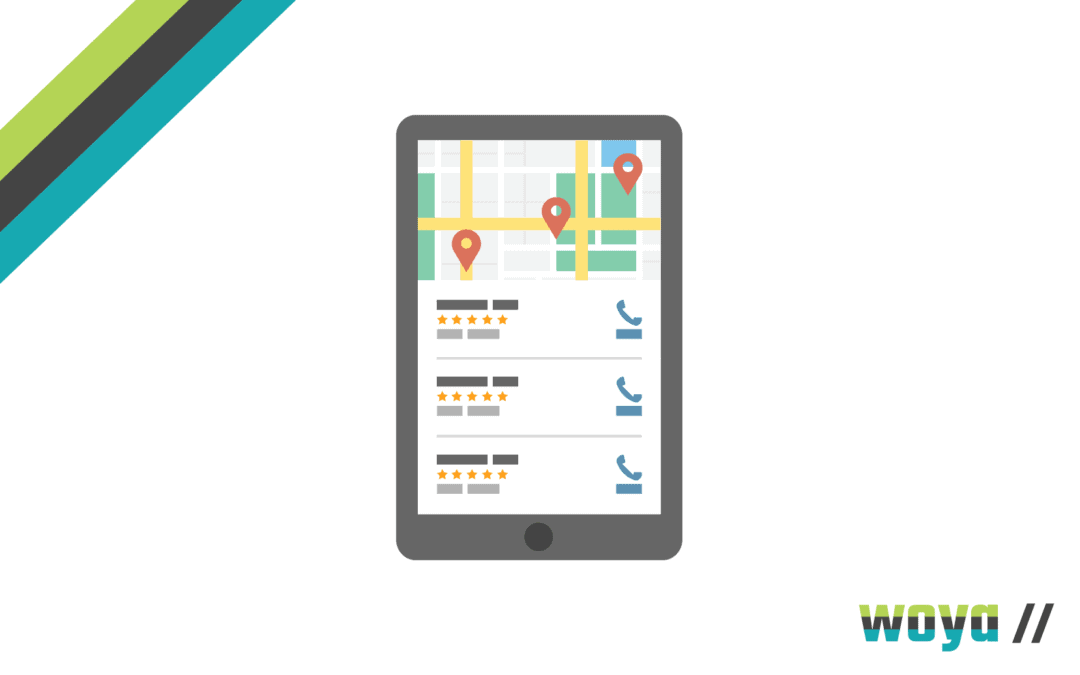
The Google Local Pack forms part of the Google Mapping offering and is a prominent section featured in the Google Local search results. The top ranking business listings in a location are displayed in a different manner to standard search results to make them stand out to local customers, listed with: the business name, map location, company description, contact information, opening hours, online reviews and any other helpful submitted information.

Local business owners are encouraged to add photos regularly too!

The three businesses which are top ranked on Google Local Pack can enjoy a pronounced listing that catches the eye with better visibility, without having to pay for a financed ad placement.

Why is it Important for Businesses to Rank in the Local Pack for Local SEO?

The statistics behind Google Local Pack are pretty compelling – with some sources such as ThinkWithGoogle finding that 50% of users who searched for a local store on Google Maps using their smartphone visited one of the results within 24-hours, and 18% of those visits lead to a purchase within that time period, too!

Search queries on Google including the phrase ‘near me’ have increased an impressive 34x since 2011, reflecting the increasing amount of searches happening on mobile devices. A case study by Moz found that 44% of users click within Local Pack search results, 29% click on the organic listings and just 8% chose to load more listings – highlighting the effectiveness and relevancy of those results at the top.

Of course, ranking above competition increases the chances of users clicking the first local business listing, but this further demonstrates the benefits of being ranked within the Google Local Pack.

It’s also been found that nearly 1 in 3 mobile searches are location-specific, Google is the top search engine used for local business searches and that 99% of consumers have used it within the last year to look up a local organisation close to them.

The Benefits of Ranking Highly in the Local Pack for Local Businesses

A Google Local Pack ranking holds many benefits for businesses, including:

Cost
A Google Local Pack listing is free: despite the fact it gives a much more prominent listing than can be achieved with a paid-for advertisement. It saves money yet produces exemplary results!

Higher Organic Traffic
Higher placement in Google Local Pack usually delivers a decent click-through rate, driving more traffic to the business’ website, resulting in more leads and sales.

More Localised Traffic
Ranking in the Google Map Pack highly targets local business listings to those in or searching within a certain location, which drives more local traffic from a geography relevant to the business and ensures that those searching appropriately are more likely to navigate through to an organisation’s physical location on the Google Map.

More Direct Contact
Even if a user doesn’t click through to a Local Pack result, this doesn’t necessarily mean that they haven’t found it useful to view.

The nature of these results are that they provide contact, current location and business hours without the need to click through further, and so indeed a user may well have found the details they need without ever having to leave the search results page. Anecdotally, businesses often say that they receive more direct contact through phone calls and emails as a result of ranking on the Google Snack Pack.

Increased Competitive Advantage
Ranking higher on Google Local Pack than local competitors provides businesses with vast competitive advantage, leading to an onward trend of more customer reviews, more visibility and more word-of-mouth marketing.

More Mobile Traffic
When browsed on a mobile device, the Google Local Pack takes up most of the visual space of the screen, making users faster to respond, more likely to click through and, as indicated by their mobile usage, more likely to visit a physical address quickly.

How to Claim and Optimise Your Google Business Profile Listing

In order to rank on Google Local Pack, an organisation must have claimed their Google Business Profile Listing (initially Google My Business) and added all relevant business information to it. This can be done by visiting business.google.com and filling out the required steps.

However, in order to ensure a high ranking in Google Local Pack, this profile should be optimised, too. This can be done by completing the following:

  • Ensuring all information in the Google Business profile is complete and up-to-date
  • Keeping all business social media profiles consistently branded, and linked back to the same URL (this forms the social signals the Google algorithm needs to demonstrate cross-channel relevancy)
  • Including mention of specific local areas on the business’ website that correspond locally to the listed business address (this forms on-page signals for Google algorithms)
  • Ensuring appropriate local bodies, businesses and/or press link to the business’ website (this forms link signals for Google to demonstrate relevancy and authenticity)
  • Claiming any appropriate online listings and directories for the business (but ensure these are genuine and well-respected sites)
  • Encouraging customers to write public reviews on the Google Review site, and responding to those reviews (this indicates to Google a genuine customer base who are well served).

There are truly a myriad of factors that influence SERP listings placement – across Google organically, on Local Pack and through paid-for advertising. It is no longer enough for businesses to just pay lip service to SEO and instead must prioritise it a critical marketing activity.

Does a Business Need to Hire a Full-Time SEO Expert?

While SEO can certainly take up the equivalent of a full-time role, many businesses are not in a position to hire a resource in-house. Instead, working with a specialist agency such as Woya Digital allows organisations to reap the benefits of having a dedicated SEO or local SEO professional working on their digital presence without having to pay for another FTE on the team.

At Woya, we work with local businesses and organisations of all shapes, sizes and types to rank as highly as possible in local search and Google maps, and benefit hugely from the increased exposure and conversions that Google Local Pack can bring. Get in touch today to chat about how we can support your business with local results.

Small Business Social Media Marketing Strategy

Small Business Social Media Marketing Strategy

Reading Time: 3 minutes

Social media platforms provide a fantastic opportunity for small business growth, however a considered plan is required to really optimise what they have to offer. We’ve put together this blog as a “Where to start” for business owners with their small business social media marketing strategy.

When it comes to social media marketing, the following quote perfectly sums it up: Tactics without strategy is the noise before defeat – Sun Tzu

1. Establish Your Goals

You should know your business goals. Whether you manage your social media marketing yourself or have a marketing partner to manage it for you, you need to establish  realistic goals that you wish to achieve through your social media marketing.

A business generally has one or more of these 6 objectives behind their social media strategy:

  • Drive website traffic
  • Create brand awareness
  • Build audience trust
  • Provide customer support
  • Attract leads
  • Increase sales

Once you know why you are doing what you are doing, you can do it better. Each post you publish will be as a result of one or more of your established goals.

2. Create Audience Persona(s)

Many business owners underestimate the value of audience persons. You should not start a social media marketing campaign without understanding who your targeted audience is.

An ‘audience persona’ or ‘buyer persona’ describes the attributes of your target audience in as much detail as possible.

Understanding the habits and behaviours of your prospects helps you find and create personalised content especially for them. Depending on the nature of your business, you may have to create more than one audience persona.

3. Select the Right Social Media Platforms

As of 2019, 7 social media platforms dominate. Each has hundreds of millions of active users, and its own unique strengths. For example, Facebook has more subscribers than YouTube; however it can’t beat YouTube when it comes to video content marketing.

You shouldn’t limit your business to just one platform, having said this, you don’t need to be active on every social media platform. Use your business goals and audience personas to identify which social media platforms your target audience are on, and also what your capacity is for consistent content creation and distribution.

4. Identify and Study Your Competitors

Studying your competitors will help you identify market trends, establish what is and isn’t working for their audience, and which platforms your competitors are on.

Take out time to thoroughly analyse what your competition is doing. Do not go out to copy what they are doing, but to do it better, and learn from what they are doing.

5. Set Up Your Social Media Accounts

You will need data from all first three steps to implement this step efficiently. While setting up a business profile on a social media platform is not difficult, there are ways to optimise how you do this. It’s worth doing a bit of research.

This step will include having logos properly sized and header images created, and completing text boxes with company information overviews. Much of the information should already be on your website – don’t feel you need to re-invent the wheel!

6. Plan and Schedule Social Media Marketing Content

Planning and scheduling are two different parts of content marketing.

In planning, you have to determine the content that is relevant to your business and attractive for your target audience. In scheduling, you have to plan which content to publish, and when. You also need to establish how many posts you are going to post each day, to each platform. This again will be determined by your capacity to create relevant content.

Consistency is an essential element of social media posting.

7. See What Works and What Doesn’t

Marketing is a continuous process, and you are guaranteed of constant changes and development. An important part of each social media marketing campaign includes gathering and analysing data and using it to improve upon the next one.

8. Run Social Media Advertisements

After you have succeeded in creating the initial presence of your business on social media channels, include paid advertisements. Organic social media reach has plummeted over the past few years,  so an element of paid advertising is critical

Every platform offers paid promotion, and it should be a part of your social media marketing strategy. However, make sure you first fully understand your market and audience to get maximum return on investment.

There is more to each point highlighted above when structuring your small business social media marketing strategy, however you need to start with understanding the basics, and then work into the detail from here.

Local Citations to put your Business on the (Google) Map

Local Citations to put your Business on the (Google) Map

Reading Time: 2 minutes

Businesses (especially smaller ones) have to do whatever they can to get their name heard, and with the internet providing everyone the opportunity to carve out their own little space online, it can often be difficult to stand out from the crowd.

When targeting customers or potential customers in a specific geographic area, local citations can be key to a business ranking highly on Google maps. A small focus on SEO (Search Engine Optimisation) can boost your profile on Google and help you feature higher than your competitors.

What are Local Citations

A ‘local citation’ isn’t a Google term, but instead refers to a really basic form of marketing on the internet. It is simply an instance of your business’ NAP (that is: business Name, Address and Phone number) appearing online – be that on your website or on others. This may be in business directories, press articles, advertiser sites or reviews of your firm.

How Do Local Citations Benefit a Local Business

Aside from it being a small ad boost, every time someone sees your information; a local citation helps reiterate to Google (and therefore Google Maps) that you are a leading business in your area and that you are a genuine business. Google’s algorithms are well developed to identify spam and disingenuous entries and so good, organic reach through local citations is an easy way for it to understand proper local businesses.

What are the Elements of a Local Citation

The three main elements of a local citation are your NAP: business Name, Address and Phone number. The key is to keep them entirely consistent throughout all citations online – any differentiator will break the link between the citation and it relating directly to your business. It may be worth considering therefore if you have a ‘Ltd’ in your name or a space/unusual capitalisation/sub-brands, that you instead revert to one shorter name for your public-facing communications to avoid any confusion.

Other elements that may be included in citations (but aren’t imperative) include e-mail addresses and links to social media profiles. Where you can, keep the names of such profiles consistent and ensure you refer to yourself in the same way across all of your marketing.

Why Local Citations Matter

Local citations are the best way for Google’s automated algorithms to understand who you are and where you are; and that you’re genuine! The internet is full of bots and false entries, and citations are genuine reviews to show you’re not one of them. Citations alone are responsible for about 10% of Google’s decision in who to rank where on Maps, and with 76% of visitors accessing local results and then visiting one of the businesses featured within 24hrs, it’s a no-brainer that it’s an area of your online presence worth investing in!

Search marketing, SEO or search engine optimisation helps websites to rank well in Google and other search engines. At Woya Digital we are specialists in small business growth through digital marketing, including Local SEO services. We make SEO services affordable for small businesses through our pay monthly marketing packages, with no upfront investment. Find out more about how we can support your business growth!

Official Motorsport Marketing Partners for the Alfa Romeo Championship 2020

Official Motorsport Marketing Partners for the Alfa Romeo Championship 2020

Reading Time: 2 minutes
Motorsport in general is having to work harder than ever to survive! Motor racing championships are currently facing exactly the same pressures as business and as we speed into a new decade, the challenges are likely to increase for the less prepared.

This trend is no different for one of the oldest and well-known motor racing series in the UK, the Alfa Romeo Championship, which is just one year away from its 40th anniversary. It may have a distinguished motor racing heritage, but it certainly is a progressive Championship.

It is with this at the forefront that the Alfa Romeo Championship has announced a new appointment, an official motorsport marketing partner for the 2020 season, Woya Digital.

West Sussex based Woya Digital is a digital marketing agency comprising of experts in respective marketing fields with a main focus on SME business growth. This is achieved through affordable, integrated digital marketing methods such as: lead generation marketing, making friends with Google via essential local SEO and organic SEO, plus designing fully optimised websites.

Managing Partner, Natalie Karr commented “We are delighted to be working with the Alfa Romeo Championship this season, a genuinely fantastic fit to our experience and growing automotive / motor racing portfolio. With so much racing heritage and the desire to expand, we are excited about what we can achieve together.”

As digital marketing experts, Woya Digital has a specialism in motorsport marketing, experience in igniting motorsport sponsorship and is generally superb at generating leads for businesses through marketing. They are working with the Championship to maximise the potential of the 2020 season and beyond.

“The challenge for all UK motorsport is real, from club racing to the dizzy heights and proven success of the BTCC.” Championship Co-Ordinator Andy Robinson commented. “Maintaining healthy driver entry levels, developing new motorsport sponsorship relationships and attracting fresh race spectators on all platforms is key and an essential goal for all levels of motorsport. This is why the Alfa Romeo Championship has taken this bold move to engage with digital marketing and motorsport enthusiasts Woya Digital.”

ENDS

About Woya Digital

West Sussex based Woya Digital is a digital marketing agency comprising of experts in respective marketing fields with a main focus on SME business growth. This is achieved through affordable, integrated digital marketing methods such as: lead generation marketing, making friends with Google via essential local SEO and organic SEO, plus designing fully optimised websites.

www.woya.co.uk

About the 750MC – Alfa Romeo Championship

With nearly four decades of racing history, the Alfa Romeo Championship features a grid spanning a huge variety of different models from the Italian marque, as well as allowing competitors with Fiat, Abarth and Lancia machinery. Three main classes (Modified, Power Trophy and Twin Spark Cup) cater for the different models in addition to the Italian Invitation class, meaning that grids include everything from a 33 to a Mito. The 750 Motor Club offers the UK’s best value racing with a continual drive to offer the highest quality competitor experience and paddock for the club-level driver, as well as a host of other benefits to suit both novice and experienced racers.

www.alfaracer.com 

Create your Business Social Media Content Calendar

Create your Business Social Media Content Calendar

Reading Time: 3 minutes

There’s nothing worse than suddenly realising you haven’t tweeted/posted to Instagram/pushed out a Facebook post for an occasion you needed to promote, to inform the world of your latest brand developments! Cobbling together a last-minute post and sending it out at any time of day, just because you need to get something out is not ideal – and it’s certainly not in the social media marketing textbooks!

These situations (amongst other reasons) are why you need to be using a social media content calendar to help you plan, track and strategise your content all year round, without any unnecessary stress.

What is a Social Media Content Calendar?

Put simply, a social media content calendar is a calendar that plans out what content you will post, to which social media channels, and when. It’s best to create as an e-document that can be regularly updated and amended as required.

Why You Need a Social Media Content Calendar

Planning out your social media content calendar in advance allows you to ensure: you’re covering all business aspects, you’re aligning your posts with your business goals, you maintain consistent branding, you’re tailoring your content to your target audience, and you’re making sure you are optimising your content for maximum reach and follower growth.

Part of this process involves researching what your customers want to see and which hashtags work best for you to maximise exposure to both your existing and your potential customers and/or service users.

Before You Get Started

Before you even start on your calendar there are a few basics that you need to first have established to allow you to move forward:

  1. KNOW WHO YOUR CUSTOMER IS – establish exactly who your target audience is so that you can create content specifically for this audience
  2. ESTABLISH YOUR GOALS – identify what the reasons are that you are even posting to social media. Establish your “whys”
  3. IDENTIFY YOUR PLATFORMS – many businesses we work with have a Facebook, Twitter, LinkedIn and Instagram social media account – because they believe they need to be visible everywhere – this is not true. Based on your capacity to regularly create and post content, identify which platforms your target audience is on, and focus your energy on these
  4.  ESTABLISH YOUR BRAND IDENTITY – especially for new or small businesses, have your logo, brand colours, fonts and all other design elements established – basically this should be standard to the look and feel of your website. It is important to have a consistent online presence as it means viewers can get familiar with your brand, find you easily, and this allows you to build up trust through familiarity

How To Arrange Your Social Media Content Calendar

Different social media channels call for different types of content, and planning ahead allows you to ensure that you’re structuring all your content in the way best suited to the particular social media channel it is intended for. On the whole, there are some basic rules you can follow to really optimise your social media usage:

  1. DON’T HARD SELL – there’s a clue in the name ‘SOCIAL media’ – it’s more about engagement and being social! Be more discreet and position yourself as a thought leader/expert in your field rather than making every post a sales pitch
  2. STICK TO THE 80/20 RULE ­in the same way it’s annoying if you follow someone who only posts selfies, it’s frustrating to see brands just posting about themselves. 80% of your posts should inform, educate and entertain, and only 20% should be business promotion
  3. MIX IT UP ­– however niche your brand, get creative and mix your content up. Try a combination that works for you, i.e. product, then current affairs, then industry, then customer, then motivational quote…and so on. The key is keep it ‘social’ and encourage engagement
  4. IDENTIFY THE BEST TIME TO POST through analysis, establish when your target audience is online, and schedule your posts around this. There are general time guidelines which can be found online, however it really depends on your industry and your social media platform insight reports will allow you to track and identify when your audience is most active online

Options to Manual Posting

For our sanity – there are social media scheduling tools available! There are a range of software options available which allow you to schedule your social media posts, with image, text and hashtags as far ahead as you like. The software will then automatically publish your posts on the chosen day, at the chosen time, and on the chosen platform!

Social isn’t going away, and if you are not yet taking advantage of social media marketing to grow your business, you are going to get left behind!

Woya Digital is a small digital marketing agency made up of experts in our various fields. We believe in making business growth through digital marketing affordable for all businesses through our pay monthly marketing packages, with no upfront investment. Find out more about how we can support your business growth through digital marketing.

How To Optimise Your Website for Voice Search

How To Optimise Your Website for Voice Search

Reading Time: 3 minutes

The world of digital marketing is constantly changing and it is often difficult for a small business to keep up. One major change with the rise in digital assistants is the increasing importance of voice search.

Let’s take a closer look at what this is and how to optimise your website for voice search so that you have more chance of your website getting found.

What is Voice Search?

Voice search has come to prominence with home devices such as Alexa. You ask questions or make requests and Alexa or Siri come up with the relevant answers. Digital assistants are now used on smartphones and other mobile devices, and as consumers, we’re becoming more reliant on them.

Why Is It Important to Optimise Your Website for Voice Search?

When you type a search term into Google, you get a whole list of options stretching down the page. With voice search, you get a limited number. How we construct voice searches is also different. We might type ‘best Chinese restaurant London’ into Google where we would ask Alexa ‘where can I find the best Chinese restaurant in London’.

Voice searches tend to be longer and less abbreviated than text searches. It’s an important distinction to understand when you come to writing your small business web content.

Tips for Optimising Your Site for Voice Search

It’s a challenge to optimise for voice searches. It means tweaking your content and having a slightly different focus.

  • Ensure your website speed is optimised. Speed in search is very important in rankings, so make sure that your site downloads at the optimal speed. It’s a small factor in voice search, but an important one.
  • Have a content-rich site. Good quality content has long been important in digital marketing, so ensure that you provide valuable, interesting content. This is less about hitting the appropriate keywords as setting yourself as the expert, go-to site that puts you at the top of searches.
  • Have blogs written in a conversational style. Because we’re asking voice search devices for information, make sure areas of your site such as blogs are written less formally and more conversationally.
  • Focus on longer tail keywords. This is one part of how people search using voice and it’s important to understand all the different permutations of language that they are likely to use.
  • Add a Q&A section or page to your website. Users are likely to ask questions such as why, what, when etc. Adding a FAQ section to your website quickly creates search-friendly entries that are more likely to show up on voice.
  • Structured data in the site backend. This is something more on the technical side. Structured data and schema mark-up allow search engines to crawl your website efficiently. The backend is basically everything on your website that you don’t see such as the underlying code.

Implementing these relatively simple tips should help your small business manage search results for voice better. It means thinking about the content on your website a little differently based on how the average consumer will be searching via voice.

Woya Digital makes digital marketing affordable for any size business through our pay monthly marketing packages, with no upfront investment. Find out how your website is performing with our FREE online SEO Site Audit Report

5 Tips to Boost Your Instagram Visibility

5 Tips to Boost Your Instagram Visibility

Reading Time: 3 minutes

When it comes to marketing any business, social media should be an important part of your strategy. It’s not only a cost effective solution, it has the potential to support you in reaching a massive audience in a small amount of time.

Get your strategy right and you should be able to achieve a strong return on investment, boost your brand visibility online and increase sales.

Instagram is used by about 60% of the top brands in the world. The platforms visual nature allows you to plug into marketing opportunities that have real value in today’s competitive world.

Building a balanced strategy to grow your business takes a lot of planning and work. Part of this means understanding the right way to construct posts and other content like Instagram Stories.

The good news is, like any other social media platform, there are several key ways to boost your Instagram visibility.

Here are our top 5 tips:

1. Optimise Your Name Field

Your Instagram name field is actually separate from your Instagram handle.

This means you can optimise the name field with relevant keywords that highlight what your business does. Instagram users search keywords on the platform, so using keywords in your name field means you have more chance of showing up in searches.

2. Optimise your Bio

You have limited words to ensure your Instagram bio hits the mark. It pays to put some thought into this and optimise the content. Again, it’s all about showing up in potential searches so use hashtags and relevant keywords.

Don’t be afraid to experiment by changing your bio every so often and measuring how this improves engagement.

3. Add Location Tags

If you want to attract the right people to your posts and Instagram stories, don’t forget location tagging.

This doesn’t just have to be where your business is based. It might be where your target audience or customers are hanging out, for example, at a special event such as a festival or exhibition.

4. Use Hashtags

Hashtags are essential to boost your Instagram visibility and the stats prove it. Putting just one hashtag in your post has the potential to increase engagement by 12.6% compared to a post without one.

You can add 30 hashtags on one Instagram post and 10 to an Instagram Story. Make use of different relevant hashtags for different posts and research your hashtags to ensure you are making use of the most effective and relevant ones.

It is also a good idea to create your own branded hashtag. You can do this by combining an important keyword and your business name.

5. Follow and Engage 

You do not exist in a vacuum on social media and it’s important to engage with and follow other brands and individuals that complement your own to boost your Instagram visibility.

Instagram can predict what type of profiles you might like and show them in the ‘suggest’ and ‘because you follow’ sections. This allows you to be more focused in how you engage on social media and improves the relationships you make when building your following.

Digital marketing is a challenge for any business but understanding what works and what can improve your reach will make a big difference.

How To Buy A Domain Name For Your Website

How To Buy A Domain Name For Your Website

Reading Time: 2 minutes

The domain name, or home, for your business is a critical point for your company’s visibility. If customers can’t easily find your online presence, they’re unlikely to search for long, and may well find a competitor of yours instead.

Domain names are a big market, and prices range from several pence to thousands of pounds depending on the terms used. Your domain name should be relevant, easy and intuitive. Here we show you how to buy a domain name for your website.

What is a Domain Name?

Put simply, a domain name is the address of your website on the internet. Beginning with www. (an abbreviation for world wide web) and ending in a range of suffixes (the most common being .com, .co.uk, .net and .org), it is usually just your company’s name.

A domain name links through to your website, so when it’s typed into an internet browser or clicked through to, it directs to your business website. Your website doesn’t actually ‘live’ here as such, but it’s how it will be found.

How Do I choose a Domain Name?

Normally, a domain name will be your business name. However, if for any reason this isn’t available, you may wish to pop in hyphens, shorten or abbreviate it or go for something else entirely. For example, if your company is a mechanics based in Sheffield, sheffieldmechanics dot com may suit you rather than your business name.

Your website can have as many domain names as you like, although you should only communicate one for consistency. Other domain names may be in place to help potential customers swerve competitors or just to capitalise on random searches.

How Do I Find Out Which Domain Names are Available?

Search! Domain name companies will be able to list out variations of your chosen name for you to select from. You may still be able to buy names directly from the owner, but this is often an expensive way to purchase and ideally, should be avoided.

Are Domain Name Prices Set?

Absolutely not! Domain name companies often host sales and different offers, so it makes sense to shop around. As with any purchase, you’ll find different price points and different levels of service from different providers, so only settle for someone that you feel works for you and your business.

Most domain names can be bought from more than one provider, so there’s no need to find the name you want and buy it immediately without checking others.

How to Buy a Domain Name for Your Website

Different domain name companies will have different processes, but in most cases, you’ll need to select your domain name and/or service package, make a card payment, and it’ll be yours immediately. Once allocated to you, you can assign the domain name to direct to your business website and it will be ready to use within 24-hours.

Domain name purchases are usually valid for a year, so unless subscribing for longer, you will need to re-purchase thereafter.

For information and support with regards to getting your new business website up and running get in touch with the Woya Digital team and find out all about our pay monthly website support packages.

Latest Google Update Released

Latest Google Update Released

Reading Time: 3 minutes

We seem to have entered an age where everyone blames their social media, web content or marketing related failures on ‘algorithms’; even if perhaps that’s not really the case. In an attempt to stop internet users scapegoating their tech updates, Google yesterday, for the second time announced a broad core algorithm update in advance of it actually happening and impacting on websites. What does a Google update actually mean for your business and web presence? Read on ….

What is a Google Broad Core Algorithm Update?

‘Broad core algorithm updates’ aren’t specifically aimed at combatting any one issue, but rather at improving Google’s overall systems efficiency. These updates can take anything from a few hours to a few days to roll out across all content online. Whilst there’s no set schedule for these updates to take place, they do usually happen every few months. This means that what can be considered ‘Google friendly’ content changes frequently.

What happens when a Google Update is implemented?

The effects of algorithm updates vary depending on exactly what work has been done ‘behind the scenes’. The most notable impact is usually a change in the search rankings of content; so you may find your pages suddenly rank considerably higher or lower than they did before. This happens as Google reassesses all of its content to better align it and list it out.

For businesses who rely heavily on organic search for traffic to their websites and resulting sales, any change in SEO situation can have devastating effects if not managed adequately. It’s important, therefore, to work on your website optimisation regularly.

What should I do about a Google Broad Core Algorithm Update?

Monitor the situation when it comes to your SEO. Any pages that have dropped in the rankings aren’t necessarily being penalised for poor content but may just sit differently alongside new criteria standards. Regardless, action should be taken after each update to ensure that your rankings are able to recover. No one set action will guarantee full recovery but doing nothing will almost definitely inhibit any chances of it – even if another update is just around the corner!

When creating new content, it’s important for it to remain as relevant and current as possible. It is this, and not necessarily stuffing pages with keywords and links, that will help the content stay well ranked. Seek advice from SEO experts and work with them at each update, staying mindful that the approach to take will need to differ every time, dependent on what changes have been implemented.

How soon can SEO action taken recover a site from a Google Brand Core Algorithm Update?

There’s a common misconception that any remedial action taken won’t take effect until the next algorithm update is run. That’s not true: any recovery should be noticeable the next time that an automated ‘crawler’ (a bot that scans the site’s content to judge its fit amongst other pages and analyse where it should sit in the search rankings) scans it. This happens periodically and doesn’t wait for further updates. This means that rapid recovery is achievable, if effective action is taken quickly.

At Woya Digital we are constantly work to ensure that our clients website SEO is optimised and brought in line with constant security and Google updates. Take advantage of our awesome Instant FREE SEO Site Audit Report which we’ll send you to highlight all the things that can be improved on your website, and to optimise your website SEO ranking.